

An Ocean in Retreat
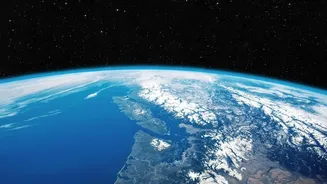
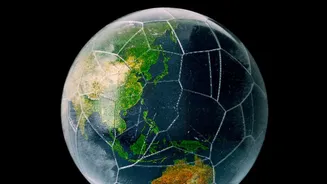
It may be Earth's largest and oldest ocean, but the Pacific is disappearing. The distance between the Americas and Asia is closing by a few centimeters each year. While that sounds trivial, over geological time it adds up. This slow-motion closure means
that in the deep future, hundreds of millions of years from now, the vast Pacific basin could cease to exist entirely. This isn't a new or alarming development in human terms, but rather a normal part of Earth's long-term geological life, driven by the same powerful forces that shape mountains and cause earthquakes.
The Ring of Fire's True Purpose
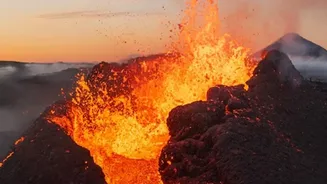
The engine of the Pacific's demise is the very feature that makes it so active: the Ring of Fire. This massive perimeter is lined with subduction zones, areas where the dense oceanic plate dives beneath the lighter continental plates and is recycled back into the Earth's mantle. Think of it as a planetary drain. While the Atlantic Ocean is mostly spreading apart from its center, creating new seafloor, the Pacific is being consumed at its edges faster than it can grow. This relentless process of subduction is what pulls the continents on either side closer together, inch by inch.
The Great Continental Dance
This movement of continents is nothing new. Geologists have uncovered evidence of a grand “supercontinent cycle,” a recurring pattern of continents merging into a single landmass and then breaking apart again over hundreds of millions of years. Most people are familiar with the last supercontinent, Pangaea, which began breaking apart during the age of the dinosaurs. But Pangaea was just the latest in a series that included older supercontinents like Rodinia and Columbia (also known as Nuna). The forces closing the Pacific today are the same ones that have been choreographing this planetary dance for billions of years.
Meet the Future: Amasia
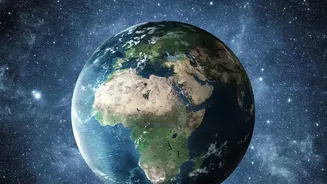
So, what will the world look like when the Pacific is gone? Using supercomputer simulations, many scientists predict the formation of a new supercontinent, which has already been named Amasia—a portmanteau of America and Asia. In this scenario, predicted to occur in 200 to 300 million years, the Americas would collide with Asia, closing the Pacific. Australia is also drifting north and is expected to connect with Asia first as part of this grand merger. The environment of this future world would be drastically different, with a vast, arid interior and much lower sea levels.
A Timeline Beyond Our Scale
It is important to remember that these changes are happening on a timescale that is almost impossible for humans to comprehend. The formation of Amasia is a scientific projection, not a doomsday prophecy. While the process is underway, its culmination is hundreds of millions of years in the future. Studying this slow, inevitable shrinking of the Pacific doesn't just predict the future; it helps us understand the fundamental, dynamic nature of the planet. It’s a reminder that Earth is a living, evolving system, constantly reshaping itself in ways we are only just beginning to fully appreciate.