







A Global Outdoor Laboratory
The headline findings emerge not from a single study, but from a global network of long-term ecological experiments. Researchers have spent years, and in some cases decades, tracking the growth of forests in carefully designed plots. One of the most significant
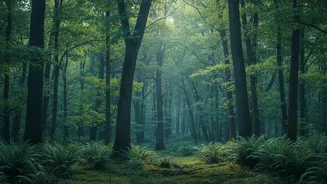
is the Biodiversity-Ecosystem Functioning (BEF-China) experiment, where scientists planted over 300,000 trees since 2009 to compare plots with a single species against those with up to 24 different species. Similar long-term data from forests across North America and Europe have been analysed, looking at everything from tree diameter to carbon absorption over a 20-year span. These outdoor laboratories provide undeniable proof of what ecologists long suspected: a forest is more than just a collection of trees; it's a complex, interconnected system where diversity is a key ingredient for success.
More Species, More Productivity
The primary conclusion from this wealth of research is clear: forests with a higher number of tree species are more productive. They grow faster, produce more biomass (wood), and are better at capturing carbon. A global study published in the journal Science estimated that a decline in tree diversity could reduce commercial forest productivity by up to 66%, with an associated economic value loss of nearly $500 billion per year. This happens because of a principle called 'complementarity'. Different species use resources in different ways. Some have deep roots that draw water from lower soil layers, while others have shallow roots. Some thrive in bright sun, while others prefer shade. In a mixed forest, these different strategies mean that resources like light, water, and nutrients are used much more efficiently, leading to more growth for everyone.
The Insurance Policy Effect
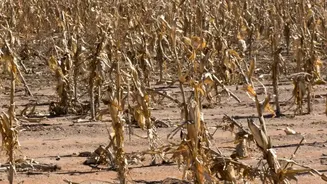
Beyond sheer growth, biodiversity acts as a crucial insurance policy for forests. A diverse forest is a resilient forest. When faced with stressors like drought, insect plagues, or disease, monoculture plantations are extremely vulnerable. If a pest targets a single tree species, the entire forest can be wiped out. In a mixed forest, however, the impact is buffered. Some species will be resistant to a particular threat even if others are not, allowing the forest as a whole to survive and recover. This is known as the 'insurance effect'. Scientific reviews confirm that the capacity of a forest to resist change or bounce back after a disturbance is directly dependent on its biodiversity at multiple scales, from genes to species to entire ecosystems.
An Amplified Climate Buffer
A fascinating finding from a 20-year global analysis of satellite data is that diverse forests are not just more productive—they are also getting better at their job over time. The study, published in Nature Climate Change, found that species-rich forests showed stronger increases in photosynthesis over the two-decade period from 2001 to 2020. They appear to be more responsive to the 'CO2 fertilisation effect', meaning they are more efficient at converting rising atmospheric carbon dioxide into growth. The worrying implication is that continued biodiversity loss could weaken this trend by up to 17% by 2050, reducing the ability of the world's forests to act as a critical buffer against climate change.
Lessons for India's Green Goals
These findings hold powerful lessons for India. As a nation undertaking massive afforestation and reforestation projects to meet its climate targets, the 'what' and 'how' of planting are critical. The research provides a strong scientific mandate to move away from monoculture plantations, which have often been favoured for their simplicity and short-term economic gains. Instead, focusing on planting mixed, native species can deliver far greater long-term benefits. These include more robust carbon sequestration, improved soil health, enhanced water cycling, and greater resilience against the mounting pressures of climate change. For a country with vast and varied forest landscapes, from the Himalayas to the Western Ghats, embracing biodiversity is not just an ecological choice but a strategic one for securing a sustainable future.