






An Unlikely Gamble
When 'Kaun Banega Crorepati' launched in July 2000, adapting the British hit 'Who Wants to Be a Millionaire?', the industry was sceptical. Many questioned the wisdom of putting a quiz show in a prime-time slot and casting a film megastar as its host—a
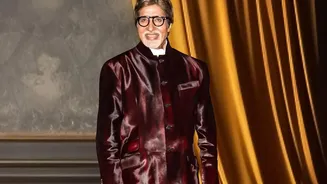
departure from the original's format. At the time, Bachchan was navigating a career slump and financial difficulties. The show was an expensive risk, reportedly costing ten times more than other programs. Yet, the producers bet on a specific quality they believed only Bachchan possessed: his unparalleled proficiency in both Hindi and English. This decision would not only revive his career but fundamentally change Indian television.
The Bilingual Bridge
Bachchan’s masterstroke was not just speaking two languages, but artfully weaving them together. He became a cultural translator, making a global format feel deeply Indian. The formal structure of the game, the rules, and the high-stakes moments were often articulated in crisp, authoritative English. Phrases like "Lock kiya jaye?" became part of the national lexicon, embodying suspense and finality. However, it was his immediate shift into warm, respectful, and often poetic Hindi that built a connection with millions. He wasn't just a host; he was a guide, a teacher, and a paternal figure who treated every contestant with immense dignity. This blend of gravitas and warmth made the show accessible to a diverse nation.
Democratizing Knowledge
Before KBC, quiz shows were often seen as intellectually elitist. Bachchan’s bilingual approach shattered that barrier. The English questions maintained an aspirational quality, while his Hindi explanations and interactions made the knowledge feel within everyone's reach. He never mocked a wrong answer or made a contestant feel small. This respectful engagement created an environment where a farmer's daughter or a small-town teacher felt they belonged on the hot seat. The show celebrated intellect and curiosity, making learning a primetime family activity and inspiring a renewed interest in general knowledge across the country.
Crafting a National Vocabulary
The impact of Bachchan's language went beyond the studio. KBC introduced a new set of phrases into everyday Indian conversation. Addressing the monitor as "Computer-ji" was a uniquely Indian touch that personified technology with respect. Greetings like "Deviyon aur sajjano" and his introductory "aadar aadab abhinandan aabhar" brought a touch of classic Hindustani elegance to television. This vocabulary wasn't just catchy; it was a shared code that united viewers. By Indianising the show's language and framing questions around Indian mythology, culture, and history, Bachchan ensured KBC was not just a copy of a foreign show but a reflection of India itself.
An Enduring Legacy
Over more than 1,000 episodes, Bachchan's performance has been a model of consistency and discipline. While other reality shows leaned into conflict, he made respect the centerpiece of entertainment. His fluency was never just about grammar; it was about emotion, connection, and cultural relevance. He could discuss complex topics with authority and then effortlessly switch to sharing a lighthearted moment with a contestant's family. This ability to modulate his language to suit the moment—from the formal to the familiar—is what cemented his role not merely as a host, but as the very soul of Kaun Banega Crorepati.