





The Ever-Changing Summit
The latest official measurement, announced on October 14, 2026, puts the height of Mont Blanc at 4,807.47 metres. This marks a significant increase of nearly two metres from its 2023 measurement of 4,805.59 metres, which was the lowest recorded since
modern surveys began in 2001. However, this doesn't signal a simple growth spurt. The peak has been on a rollercoaster ride for decades. In 2007, it reached its highest recorded altitude of 4,810.90 metres. This constant flux has less to do with the mountain itself growing and more to do with the dynamic cap of ice and snow that sits on its rocky peak.
A Mountain of Snow, Not Rock
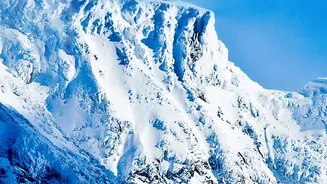
It’s a common misconception that the entire mountain is shrinking or growing. The rock summit of Mont Blanc is stable at around 4,792 metres above sea level. The variation comes from the thick blanket of 'eternal snow' that covers it. This layer can be over 15 metres thick, and its volume changes depending on the year's weather. The biennial measurement, carried out by French surveyors, isn't just about finding a number; it's a scientific mission to understand how this snowy crown is behaving. Using high-precision satellite technology (GNSS) and drones, scientists create a 3D model of the summit to track these changes with centimetre-level accuracy.
The Weather's Sculpting Hand
So what makes the snowpack change so much? The primary drivers are high-altitude winds and precipitation. At nearly 4,800 metres, powerful winds can either pile up vast amounts of snow on the summit or scour it away, effectively lowering the peak. The amount and type of snowfall during the year are also critical. A winter with heavy, wet snow will add more volume than one with light, dry powder. The 2026 measurement, for instance, followed a period that reversed the previous shrinking trend, suggesting that weather patterns in the preceding seasons favored accumulation. Essentially, the top of Mont Blanc is a giant snowdrift, constantly being reshaped by the elements.
What This Tells Us About Climate
While it’s tempting to draw a direct line from a single year’s measurement to long-term climate change, glaciologists urge caution. They distinguish between the summit's height and the overall health of the Alpine glaciers. A higher summit doesn't negate the fact that glaciers at lower altitudes are melting at alarming rates. However, these long-term measurements provide invaluable data on high-altitude weather patterns. Tracking the summit's snow depth helps scientists understand conditions in a part of the atmosphere that is difficult to study. Over decades, the trend in Mont Blanc's height fluctuations can reveal shifts in temperature and precipitation, offering a unique barometer for climate change's impact on Europe's highest environments.
A Global Barometer
The story of Mont Blanc is not unique. All great snow-capped mountains, including the Himalayas, experience similar phenomena. The stability of their snowpack is vital, acting as natural water towers that supply meltwater to vast regions downstream. Changes in these high-altitude environments, whether in the Alps or closer to home, have profound implications for water security, ecosystems, and agriculture. By studying the subtle shifts on a single European peak, we gain a clearer picture of the forces reshaping our planet's most majestic and critical landscapes.