





The Brutal Gauntlet of Spaceflight
A rocket's journey is incredibly violent. During launch, it endures immense gravitational forces, intense vibrations that shake every bolt and weld, and the deafening roar of its own engines. As it returns through the atmosphere, it faces scorching temperatures
that can reach nearly 5,000 degrees Fahrenheit, transforming it into a controlled meteor. This extreme environment puts enormous stress on the vehicle's structure. Materials can develop microscopic cracks from the constant vibration and thermal cycling. Engines, which operate under incredible pressure and heat, are particularly vulnerable. Every flight is a battle against physics, and even a successful landing doesn't mean the rocket is unscathed.
The Post-Flight Teardown Begins
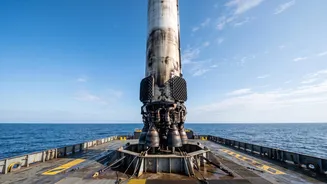
Once a booster is recovered, whether from a landing pad or a droneship at sea, a meticulous process of inspection and refurbishment begins. The first step is often a thorough cleaning to remove soot and other residues from the fiery descent. Engineers then conduct a comprehensive assessment, starting with detailed visual checks of the entire structure. They examine the booster’s nine Merlin engines, fuel tanks, grid fins used for steering, and the landing legs that absorb the impact of touchdown. This is far more than a quick look-over; technicians are hunting for any sign of wear, damage, or fatigue that could compromise the next mission. Flight data from onboard sensors is also analyzed to identify any performance anomalies that might point to a hidden issue.
Looking for Flaws You Cannot See
Visual inspections are just the beginning. The real challenge lies in finding damage that is invisible to the naked eye. To do this, aerospace companies rely on non-destructive testing (NDT) methods. These advanced techniques allow engineers to peer inside the rocket's structure without taking it apart. Ultrasonic scans can detect tiny internal cracks in metal components, similar to how a medical ultrasound works. X-rays are used to inspect welds and the complex plumbing of the engines for any imperfections. This level of scrutiny is essential because a microscopic flaw could become a catastrophic failure under the extreme forces of the next launch. Every critical component must be certified to be as safe as a brand-new part.
The Critical Role of the Heat Shield
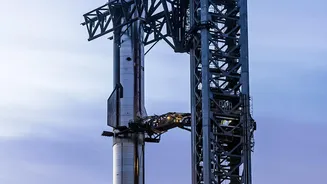
For spacecraft designed to return from orbit, like SpaceX's Starship, the thermal protection system, or heat shield, is arguably the most critical component for survival. These systems, often made of thousands of individual ceramic tiles, must withstand the intense heat of atmospheric reentry. After a flight, each tile is meticulously examined for cracks, chips, and signs of heat damage. The Space Shuttle program demonstrated how labor-intensive this process can be, with extensive tile repair required between every mission. Developing a robust and rapidly reusable heat shield is one of the biggest engineering hurdles to achieving frequent, airplane-like spaceflight. If the shield isn't perfect, the vehicle could burn up on its return to Earth.
Refurbish, Replace, and Relaunch
Inspection is not just about finding problems; it's about fixing them. The process is more accurately described as refurbishment. Some components may be replaced outright after a single flight, while others are certified for multiple missions. Technicians will reassemble the rocket, carefully mating the engines back to the main body and reconnecting all the fuel lines and electrical systems. The goal of companies like SpaceX is to make this process as efficient as possible. The turnaround time for a Falcon 9 booster has been reduced significantly over the years, with a record of just nine days between flights for one booster. This rapid reuse is what drives down the cost of accessing space, but it can only be achieved through a rigorous and reliable inspection and refurbishment pipeline.