



A Planet That Shouldn't Have an Atmosphere
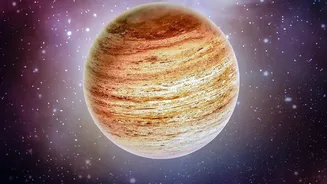
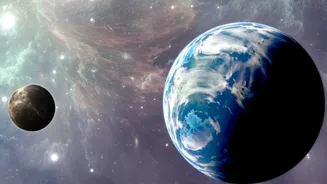
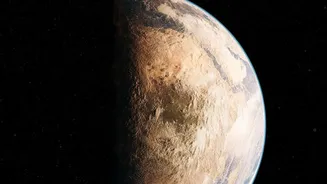
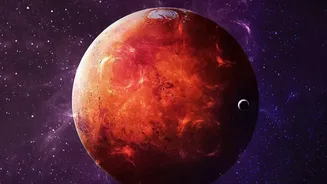
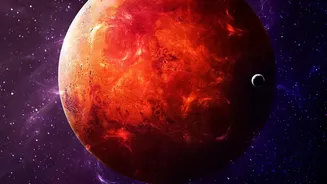
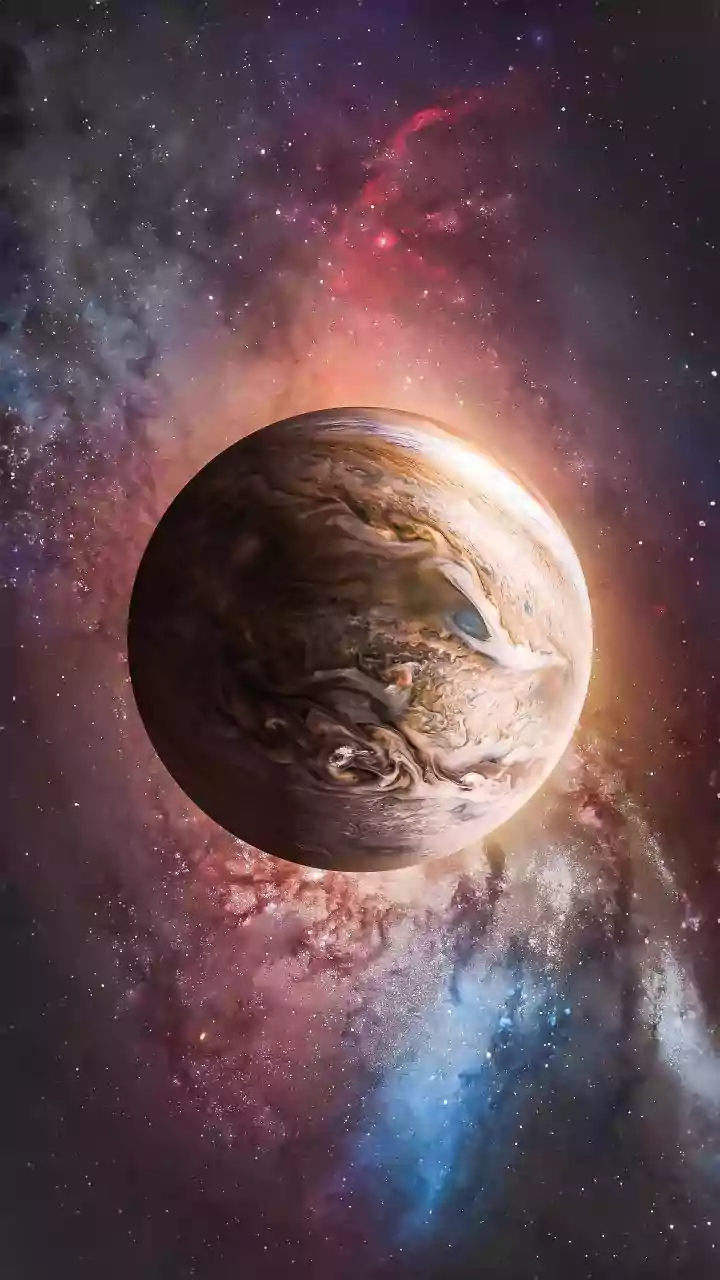
Meet GJ 1214 b, an exoplanet located about 48 light-years away. It belongs to a class of worlds called 'super-Earths' or 'mini-Neptunes'—larger than Earth but smaller than Neptune, and the most common type of planet found in our galaxy, though curiously
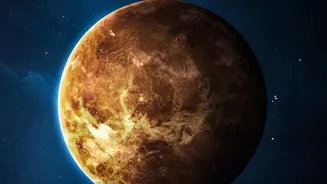
absent from our own solar system. For years, GJ 1214 b was a source of frustration for astronomers. It was clear something was shrouding the planet, but older telescopes couldn't pierce the veil. The expectation was grim; planets orbiting so close to temperamental red dwarf stars are supposed to have their atmospheres blasted away into space. But recent observations from the James Webb Space Telescope (JWST) have delivered a stunning surprise: GJ 1214 b has a substantial atmosphere after all, one rich in haze and showing signs of water vapor, methane, or even carbon dioxide.
The Hostile Home of a Red Dwarf
To understand why this is so surprising, you have to understand red dwarf stars. They are the most common stars in the universe, but they are not gentle hosts. Especially in their youth, they are prone to violent flares, blasting their surroundings with intense X-ray and ultraviolet radiation. For a planet like GJ 1214 b, which orbits its star once every 1.6 Earth days, the proximity is extreme. This closeness means it is tidally locked, with one side perpetually facing the star in eternal day and the other in endless night. Standard models predict this constant bombardment of radiation should have stripped any primitive atmosphere from the planet long ago, leaving it an exposed, lifeless rock. This process, known as atmospheric erosion, is considered a major barrier to habitability for planets around red dwarfs.
What Webb Actually Saw
Previous attempts to study GJ 1214 b's atmosphere were inconclusive, blocked by what appeared to be a thick, featureless layer of clouds or haze. But the powerful infrared instruments on the JWST can see what other telescopes could not. By analyzing the starlight filtering through the planet's atmosphere during a transit, and by measuring the heat radiating from the planet itself, scientists created the most detailed picture yet. The data revealed an atmosphere that is incredibly reflective, likely due to a dense layer of haze. Underneath this haze, Webb detected the chemical fingerprints of molecules like water vapor and methane. More recent analysis even suggests the presence of carbon dioxide, indicating the atmosphere is rich in elements heavier than hydrogen and helium. This composition directly contradicts the idea of a thin, hydrogen-dominated atmosphere that has been slowly leaking into space.
A Second-Chance Atmosphere?
So if the original atmosphere was stripped away, where did this new one come from? The leading theory is that GJ 1214 b has a 'secondary' atmosphere. This means that after losing its primordial hydrogen-helium envelope, the planet generated a new one from within. Intense volcanic activity, fueled by the planet’s hot interior, could have spewed gases like water vapor, carbon dioxide, and methane into the air over millions of years, effectively giving the planet a second life. Another theory suggests the planet may have formed farther from its star, where water ice was plentiful, and later migrated inward. The journey toward the star would have boiled this ice, creating the thick, steamy atmosphere we see today. This resilience suggests that even planets in seemingly hostile environments might have a way to build and maintain an atmosphere.
Why This Discovery Reshapes the Search for Life
The findings from GJ 1214 b are more than just a curiosity; they have profound implications for the search for life beyond Earth. Red dwarfs are the most numerous stars, and if their planets can hold onto or regenerate atmospheres, it vastly increases the number of potential targets for study. For a long time, the violent nature of these stars made many scientists pessimistic about the habitability of their planetary systems. GJ 1214 b serves as a powerful counterexample, showing that our assumptions can be too simple. It proves that planets are complex and diverse systems that can evolve in unexpected ways. If a world so close to its star can retain such a substantial blanket of gas, it offers hope that other, more favorably located planets around red dwarfs might also have atmospheres—and where there's an atmosphere, there's a chance for liquid water and, just maybe, life.