




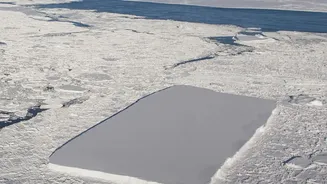
An Unprecedented Meltdown
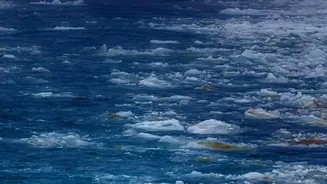
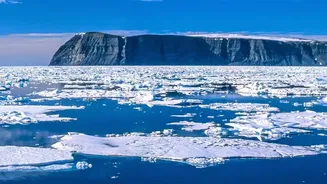
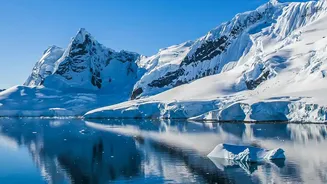
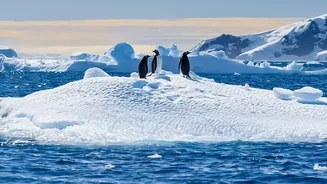
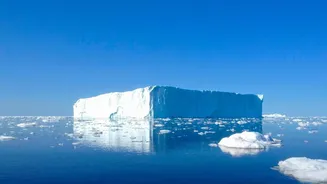
The ice surrounding Antarctica is in a state of unprecedented decline. In September 2026, the winter sea ice peak was the third-lowest since satellite records began, falling a million square kilometres short of the long-term average. This wasn't a one-off
event; the four lowest winter maximums have all occurred in the last four years. This follows record-low summer ice levels in recent years, alarming scientists who see it as a clear sign of a system that has fundamentally changed. This loss of ice, an area roughly equivalent to Greenland since 2015, is one of the largest environmental shifts seen on Earth in decades.
The Ocean Engine Is Sputtering
The most significant change is happening beneath the waves. The Southern Ocean is a critical engine for the planet's circulatory system. As sea ice forms in winter, it rejects salt, making the water below colder and denser. This super-dense water, known as Antarctic Bottom Water (AABW), sinks and flows north, driving a global network of currents often called the 'global conveyor belt'. This process moves heat, oxygen, and nutrients around the planet. However, with less sea ice forming, the production of this dense water is slowing down. Recent studies show the volume of AABW has shrunk significantly, with some models predicting a 40% slowdown in this deep-ocean circulation by 2050 if emissions remain high. This is like a vital artery for the planet beginning to clog.
A Vicious Cycle of Warming
Scientists have identified a dangerous feedback loop now at play. For decades, the surface of the Southern Ocean was becoming less salty, which helped insulate deep, warmer water from the surface. Since around 2015, that trend has sharply reversed. Strengthening winds have helped pull warmer, saltier deep water to the surface. This warmer water melts sea ice from below, which in turn means there's less reflective white ice to bounce sunlight back into space. The darker ocean then absorbs more heat, further warming the water and making it even harder for new ice to form. This self-reinforcing cycle could lock the Southern Ocean into a new, persistent low-ice state.
Global Consequences from a Distant Ocean
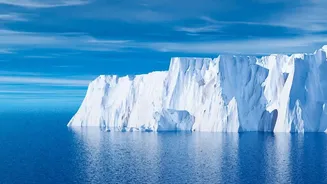
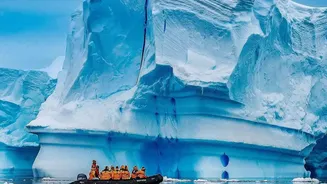
Changes in Antarctica don't stay in Antarctica. A slowdown in the ocean's 'conveyor belt' has massive global implications. This circulation system plays a huge role in regulating climate by transporting heat. Weakening it could alter weather patterns and rainfall far from the poles, potentially impacting agriculture worldwide. Furthermore, the loss of sea ice has a direct impact on the Antarctic continent itself. Sea ice acts as a protective barrier for the massive ice shelves that fringe the land. Without it, these shelves are more exposed to damaging ocean swells, which can weaken them and accelerate the flow of glaciers from land into the sea, directly contributing to global sea-level rise.
Why It Matters Here in India
While the Southern Ocean feels a world away, its health is connected to our own climate stability. The global ocean circulation system, which is being disrupted, is a key factor in the planet's climate engine. Major changes to this system can have cascading effects that scientists are still working to fully understand, but they could eventually influence large-scale weather phenomena, including the intricate patterns of the Indian monsoon. Any significant acceleration in sea-level rise from Antarctic melt also poses a direct and serious threat to India's extensive and densely populated coastlines. The events unfolding at the South Pole are not just a remote scientific curiosity; they are a critical warning sign for the entire planet.