






Your Visa: The Key to Entry
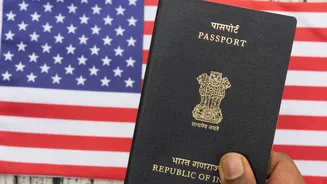
Think of your F-1 visa as a travel document. It is a sticker in your passport issued by a U.S. embassy in India that allows you to travel to a U.S. port of entry and request admission as a student. Its primary function is to get you to the door. The expiration
date on your visa dictates the time window during which you can enter the United States. For example, if your visa expires in December 2026, you must enter the U.S. on or before that date. It does not determine how long you can legally stay in the country once you are inside. This is a crucial distinction many students miss.
Your Status: The Right to Stay and Study
Once you are admitted into the U.S. by a Customs and Border Protection (CBP) officer, you are granted F-1 status. This is your legal permission to live in the U.S. for a specific purpose: to be a full-time student. Your status isn't tied to the visa's expiration date. You can legally remain in the U.S. with an expired F-1 visa as long as you are maintaining your F-1 status. Maintaining your status means following a strict set of rules, including being enrolled full-time, making normal academic progress, and not working without authorization.
The I-94 and D/S: Your Most Important Documents
So if the visa date doesn't matter, what does? Your lawful stay is governed by two things: your Form I-20 and your Form I-94 Arrival/Departure Record. When you enter the U.S., the CBP officer creates an electronic I-94 record. For students, this record is typically marked with “D/S,” which stands for “Duration of Status.” This means you are authorized to stay in the U.S. for as long as it takes to complete your course of study, plus any authorized period of practical training (like OPT) and a grace period afterward. Your status is valid as long as you are following the rules and your I-20 is active and unexpired.
How Students Lose Their Status
It is much easier to fall out of status than most students realize, and the consequences are severe. Common violations include dropping below a full-time course load without prior permission from your Designated School Official (DSO), working off-campus without authorization, or simply not graduating by the program end date on your I-20. Even an academic suspension can lead to the termination of your SEVIS record, which effectively ends your legal status. Once you are out of status, you lose all benefits of being an F-1 student, including the right to work on or off campus, and you are expected to leave the U.S. immediately.
A New Rule to Watch
It is important to note that regulations are changing. A new rule effective September 15, 2026, will phase out the “Duration of Status” (D/S) system for new entries. Instead, students will be admitted for a fixed period, generally not to exceed four years. If your program, like a PhD, takes longer, or you wish to use the full three years of STEM OPT, you will need to apply for a formal Extension of Stay (EOS) with U.S. Citizenship and Immigration Services (USCIS). This makes tracking your program dates and maintaining status even more critical.
Protecting Your Future
The key takeaway is to be proactive. Never assume anything about your immigration status. Your university's International Student and Scholar Services (ISSS) office and your Designated School Official (DSO) are your most valuable resources. They are there to help you navigate these complex rules. Always consult them before dropping a class, considering any form of employment, or if you feel you may not finish your program on time. Keep your I-20 updated, know your program end date, and always prioritize maintaining your F-1 status above all else.