

A New Window on the Cosmos
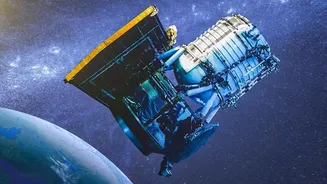
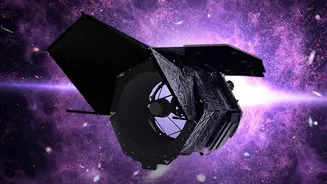
NASA has given the green light for the next phase of development for the PRobe far-Infrared Mission for Astrophysics, or PRIMA. This powerful new space telescope is designed to see the universe in far-infrared light, a spectrum that is largely invisible
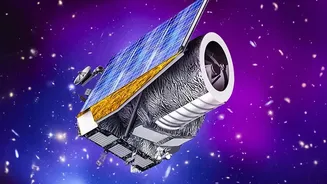
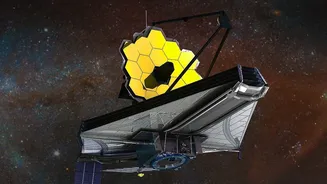
to the human eye and even to other premier observatories like the James Webb Space Telescope (JWST). By capturing this type of light, PRIMA will be able to pierce through dense cosmic dust clouds that obscure visible light, giving scientists an unprecedented view of processes hidden within. The mission will feature a 1.8-meter (5.9-foot) telescope equipped with highly sensitive instruments to conduct deep surveys of the sky, effectively bridging the observational gap between infrared telescopes like JWST and radio telescopes on the ground.
Hunting for Cosmic Origins
PRIMA's primary goal is to tackle some of the most fundamental questions in astrophysics. The mission will investigate the formation of stars and planetary systems, trace how galaxies and their central supermassive black holes grow over cosmic time, and even explore how the building blocks of life, like water, are distributed across the universe. One of its key tasks will be to study protoplanetary disks—the swirling collections of gas and dust around young stars where planets are born. Scientists hope to quantify the role water plays in planet formation and determine where the chemical ingredients for life exist. This work can't be done with other telescopes because the necessary chemical signatures are only visible in the far-infrared wavelengths that PRIMA is built to detect.
The First 'Probe Explorer'
PRIMA is not just another mission; it's the first of a new class of NASA projects called Probe Explorers. This new category was recommended by the scientific community to fill a critical gap between smaller, less expensive missions and the massive, multi-billion-dollar flagship observatories like JWST. Probe-class missions are designed to be ambitious and address high-priority science, but with a firm cost cap. This new approach allows NASA to pursue cutting-edge science more frequently without committing the decade-spanning efforts and immense budgets required for flagship projects. The Probe Explorer program is part of NASA's oldest continuous program, the Explorers Program, which began with Explorer 1 in 1958 and has launched over 100 missions.
The Billion-Dollar Question
A defining feature of the PRIMA mission is its budget. The project's cost is capped at $1.2 billion, not including the expense of its launch. This figure, while substantial, is a fraction of the cost of its larger cousins; for comparison, the James Webb Space Telescope cost around $10 billion to build and launch. The fixed budget provides NASA with a more predictable and sustainable way to fund major scientific endeavors. By selecting PRIMA, NASA is validating a model for ambitious yet cost-contained missions that can deliver breakthrough science. The project will now move into Phase B, a stage focused on finalizing the design and technology before a final confirmation review determines its readiness for full-scale manufacturing.
The Road to Launch
With the mission now advancing in its development, the team at NASA's Jet Propulsion Laboratory and other partner institutions will finalize the engineering and instrument designs. If all milestones are met and the mission passes its confirmation review, PRIMA will enter its main manufacturing phase. The telescope is currently targeted for a launch no earlier than 2033, after which it will begin a planned five-year mission to survey the cool universe. Over the next few years, engineers and scientists will work to build and test its advanced systems, including ultrasensitive detectors and cryogenic coolers needed to see the faint heat of the far-infrared cosmos. The project is a major international collaboration, with contributions from space agencies in Germany, Canada, and Japan, among others.