




A Cosmic Case of Mistaken Identity
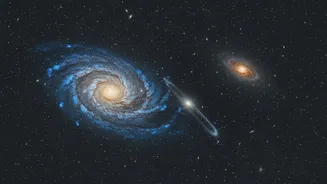
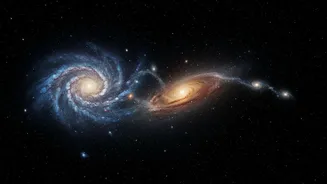
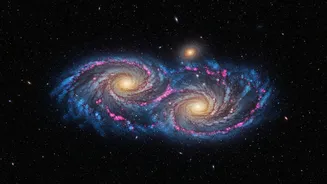
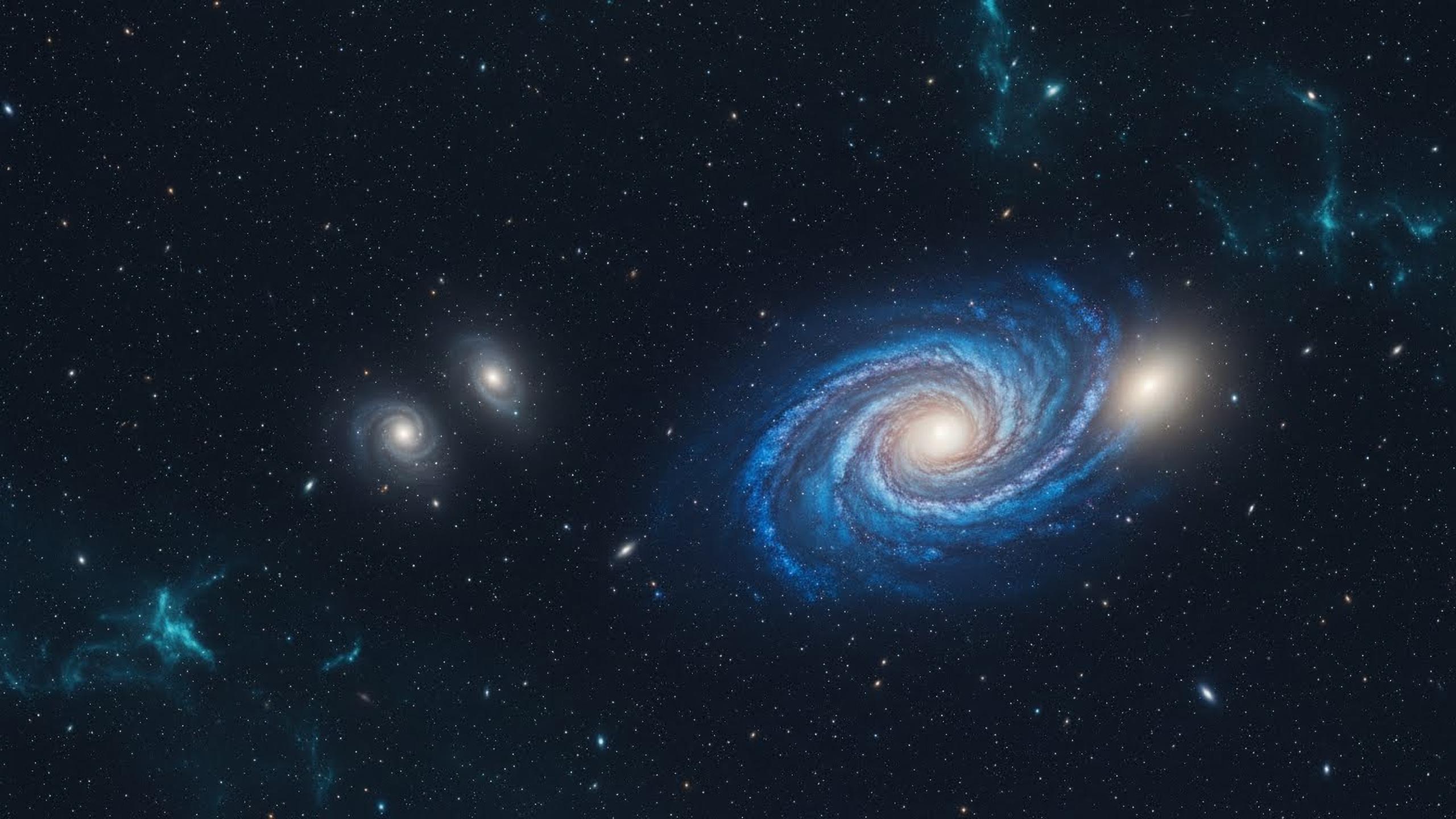
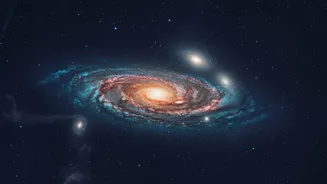
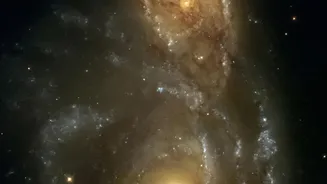
The image in question features a trio of galaxies known collectively as NGC 7764A, located about 425 million light-years from Earth in the constellation Phoenix. In the upper right, two galaxies are visibly interacting; their shapes are distorted, with
long trails of stars and gas being pulled away from them. It looks as though they’ve been struck by the seemingly serene, round galaxy to the lower left. This visual narrative is compelling, suggesting a dramatic, high-speed cosmic collision. However, the reality of galactic interactions is far slower and more complex than this snapshot implies. And crucially, not everything that appears close together in the vastness of space actually is.
Optical Pairs vs. True Partners
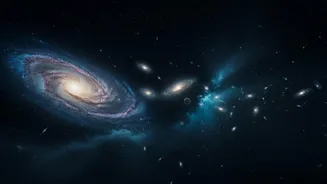
In astronomy, there’s a critical distinction between an “optical pair” and a physically interacting pair. An optical pair is a line-of-sight illusion. Imagine looking down a long road and seeing two people who appear to be standing side-by-side, when in reality, one is a hundred metres further down the road than the other. From your perspective, they look like a pair. This is exactly what can happen with galaxies. Two galaxies might be separated by millions of light-years, but from our viewpoint on Earth, they align perfectly to look like neighbours. A true interacting pair, on the other hand, consists of galaxies that are genuinely close enough for their mutual gravity to affect one another, often leading to mergers or dramatic structural changes over millions of years.
The Detective Work of Astronomy
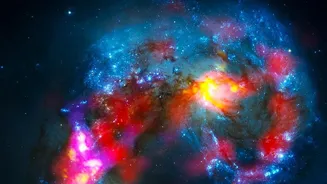
So how do scientists tell the difference? They use several clues. The most definitive is measuring the distance to each galaxy using a phenomenon called redshift. As the universe expands, light from distant objects gets stretched, shifting it towards the red end of the spectrum. By measuring the precise colour spectrum of a galaxy, astronomers can calculate its redshift and, from that, its distance. If two galaxies in a visual pair have vastly different redshifts, they are an optical illusion. Another clue is visible distortion. When galaxies are truly interacting, their immense gravity wreaks havoc on each other. This gravitational tug-of-war pulls out long streams of stars and gas called tidal tails, warps spiral arms, and can trigger intense bursts of new star formation.
Solving the NGC 7764A Puzzle
Applying this science to the Hubble image reveals the truth. The two galaxies in the upper right, which appear intertwined and have been nicknamed the “USS Enterprise” for their saucer-like shape, are indeed a physically interacting pair. The telltale streams of gas and stars are clear evidence of their gravitational dance. However, the third, “bowling-ball-shaped” galaxy is the cosmic photobomber. While NASA and ESA scientists note it's possible it is interacting due to its relative proximity, it is most likely an optical illusion—a foreground or background object that just happens to align with the real pair from our perspective. The appearance of a three-way collision is just a trick of cosmic perspective.
Why These Cosmic Dances Matter
Studying both true interacting pairs and optical alignments is vital. Galactic mergers are a fundamental process in the universe's evolution. They are how large galaxies, including our own Milky Way, are thought to have grown over billions of years. By observing these slow-motion collisions, astronomers can test and refine their models of galaxy formation. In fact, our own galaxy is on a collision course with the neighbouring Andromeda galaxy, with the merger expected to begin in about 4.5 billion years. Images of galactic pairs like those in NGC 7764A provide a sneak peek into our own cosmic future and help us piece together the grand, dynamic history of the universe.