





The results of the US midterm elections are in, delivering a stunning victory for the Democratic Party, which has now secured control of both the House and the Senate. This political earthquake in Washington is set to create significant ripples for the global
economy, particularly for the crucial India-US partnership.
A New Political Map in Washington
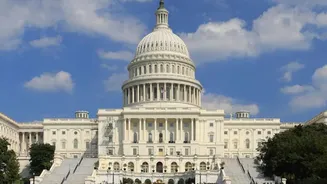
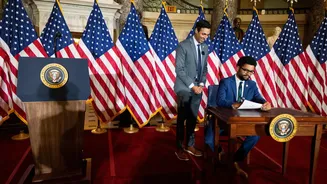
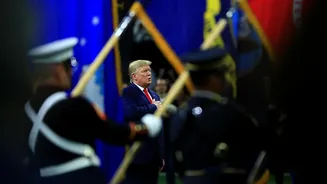
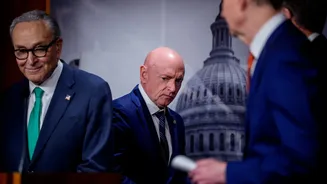
American voters delivered a resounding victory for the Democrats on November 3, 2026, in a widespread rebuke of the incumbent Trump administration. The party successfully flipped multiple seats to gain majorities in both the House of Representatives and the Senate, a political shift that fundamentally alters the balance of power for the remaining two years of the presidential term. This gives Democrats the authority to set the legislative agenda, exercise stringent oversight over the administration's actions, and block presidential nominees. For India, this means that while the White House remains the primary negotiating partner, a new, powerful and often contrasting center of influence has emerged on Capitol Hill that will shape everything from trade to immigration.
Trade and Tariffs on the Table
Trade is poised to be the most immediate area of focus. The Trump administration has frequently used executive powers to impose tariffs, creating uncertainty for Indian exporters. With Democrats in control, the President's ability to act unilaterally on trade is now significantly constrained. The new Congress is expected to hold more hearings and demand greater transparency on trade negotiations, including the pending India-US trade agreement. However, this doesn't guarantee a complete reversal of protectionist policies, as protecting American industries has bipartisan support. Analysts believe that while a weakened President may feel pressured to secure a quick trade deal with India as a 'win', Indian negotiators now have more leverage and institutional channels to push for more favourable and predictable terms.
The Technology Corridor's Future
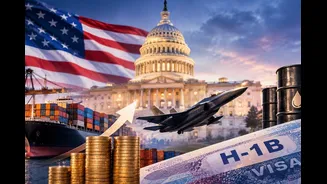
The India-US technology partnership, particularly the initiative on Critical and Emerging Technology (iCET), has become a central pillar of the bilateral relationship. The goal is to build resilient supply chains and collaborate on everything from AI and quantum computing to semiconductors and defence innovation. The midterm results could introduce new dynamics. For example, some analysts suggest that the Democratic win might slow down the massive buildout of AI data centers in the US due to environmental and energy consumption concerns. While this could affect some infrastructure projects, it may also create new opportunities for Indian IT firms in cloud optimisation, application modernisation, and energy-efficient operations. The change in Washington will also likely intensify scrutiny of immigration policies like the H-1B visa program, which is crucial for Indian tech talent. Democratic lawmakers may oppose further restrictive measures, providing some relief to Indian IT companies.
Investment and Strategic Priorities
The election outcome is also expected to influence investment flows. A new political environment could lead to a softening of the US dollar, potentially increasing foreign portfolio investment into emerging markets like India. However, it also introduces a layer of unpredictability. For instance, a Democratic-controlled Congress could lead to a contentious debt ceiling negotiation in mid-2027, which could trigger volatility in global financial markets. On the strategic front, while the core convergence between India and the US is expected to remain strong, the methods may change. A Democratic Congress is likely to exercise more oversight on foreign policy, potentially constraining the President's actions on issues like the conflict in Iran and sanctions on countries purchasing Russian oil, giving New Delhi more room to manoeuvre diplomatically.