




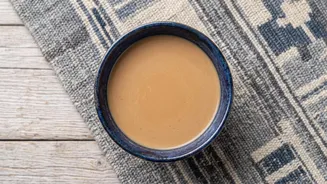

Hyderabad's Irani Chai Builds Creaminess From Strong Decoction And Slow-Boiled Milk
In the bustling lanes of Hyderabad, a different kind of magic brews. It's not just tea; it's Irani chai, a cultural touchstone served in classic cafes, where its signature creaminess tells a story of patience, partition, and perfection.
More Than a Cup of Tea
For many in Hyderabad,
the day doesn't truly begin or end without a cup of Irani chai. It’s far more than a simple beverage; it's a ritual and a cornerstone of the city’s social fabric. Introduced by Persian immigrants in the 19th century, this tea became the heart of Irani cafes—welcoming spaces where poets, students, and workers gathered for conversation over a hot cup. These cafes became vital cultural hubs, democratic in spirit, where people from all walks of life could connect. The drink itself is a departure from the spice-heavy masala chai found elsewhere in India, focusing instead on a deep, robust tea flavour and a luxurious, velvety texture.
The Tale of Two Pots
The secret to authentic Irani chai lies in its unique preparation method, a tale of two separate pots. Unlike regular chai where all ingredients are boiled together, Irani chai involves two distinct processes that only come together at the very end. This separation is crucial. It allows the tea decoction to develop a profound, concentrated strength without bitterness, while the milk is transformed into a thick, creamy, and slightly sweet base. This 'double decoction' method ensures that neither component compromises the other, creating a perfectly balanced and layered final product. It is a slow, deliberate process that stands in stark contrast to the quick boil of a typical street-side tea.
The Heart: A Potent Decoction
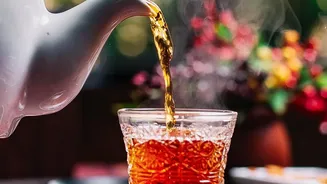
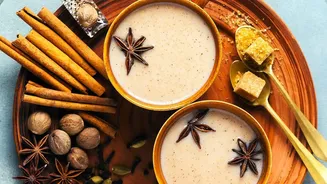
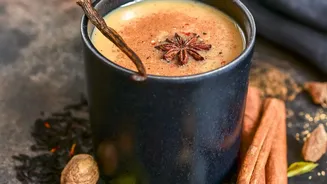
The foundation of a great Irani chai is the 'lipton' or decoction. A generous amount of strong black tea leaves, often a robust Assam variety, is simmered slowly in water. Sometimes, whole spices like green cardamom are added for a subtle fragrance, but never enough to overpower the tea itself. This mixture is brewed for an extended period, sometimes in a sealed 'dum' style, until it reduces to a dark, potent, and aromatic concentrate. The goal is to extract the deepest possible flavour from the leaves, creating a liquid that is bold enough to stand up to the rich milk it will later join. This slow simmering, rather than a rapid boil, prevents the extraction of bitter tannins, ensuring a strong but smooth finish.
The Soul: Slow-Boiled Creaminess
While the decoction provides the flavour, the milk provides the soul. Full-fat milk, traditionally from water buffaloes for its higher fat content, is placed in a separate, large vessel to simmer on low heat for hours. This isn't a quick scald; it's a patient reduction. As the milk slowly cooks, its water content evaporates, causing it to thicken naturally and caramelise slightly, which gives it a distinct richness and a hint of sweetness. To enhance this creaminess, many traditional recipes call for the addition of mawa or khoya (dried milk solids). This ingredient, made by reducing milk until only the solids remain, is what gives the chai its signature thick, almost dessert-like quality. Some modern recipes use condensed milk or milk powder as a quicker substitute.
The Perfect Union
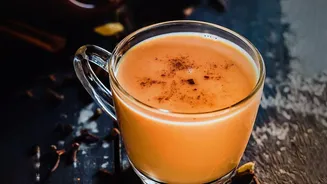
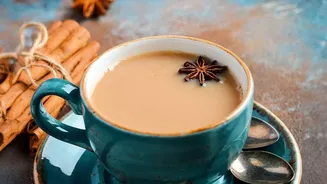
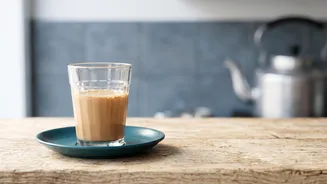
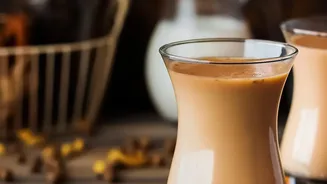
The final act of making Irani chai happens right at the moment of serving. The thick, sweetened milk is poured into a cup, and the dark, potent tea decoction is added on top. The ratio is key, with the final drink being more milk-forward than a typical chai, contributing to its creamy character. The result is a beautifully layered drink with a velvety mouthfeel and a robust tea kick. Traditionally served in small ceramic cups or glasses, it is the perfect companion to another Hyderabadi icon: the Osmania biscuit. The slightly salty, buttery biscuit is the ideal foil for the sweet, creamy chai, creating a pairing that is cherished across the city's beloved Irani cafes.