








A Vision Through Emeralds
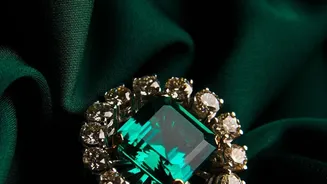
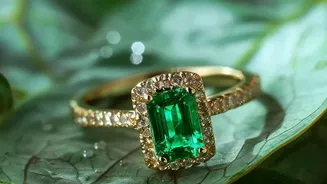
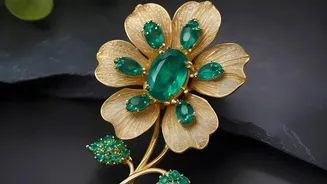
The ‘Gate of Paradise,’ or ‘Astaneh-e-Ferdaws,’ is one of the most remarkable luxury artifacts from the Mughal era. Its lenses are not glass, but two perfectly carved, drop-shaped slices from a single, flawless Colombian emerald estimated to have originally
weighed over 300 carats. Crafted in India around the mid-17th century, a time when the Mughal Empire was at its zenith, the spectacles were likely commissioned for an emperor or a high-ranking prince, possibly even Shah Jahan himself. The name itself is a nod to the deep significance of the color green in Islamic tradition, which is associated with salvation and paradise. But beyond their spiritual symbolism, these spectacles tell a story of immense global reach. The journey of an emerald from a mine in Colombia, likely transported by Spanish traders across the Atlantic, to a master craftsman’s workshop in India, is a testament to an interconnected world that existed long before modern globalization.
The Workshop of the World
The creation of such an extravagant object was only possible because, in the 17th century, Mughal India was an economic superpower. Historians estimate that the empire accounted for nearly a quarter of the world's entire economic output. It was not a passive supplier of raw materials but the manufacturing heart of the early modern world. Imperial workshops, or ‘karkhanas,’ employed thousands of the finest artisans to produce luxury goods for the court. But beyond the court, a vast network of private artisans produced high-quality goods for a global market. Indian textiles, in particular, were in a class of their own. Fine muslins from Dhaka, so delicate they were called ‘woven air,’ cotton calicos from Calicut, and vibrant silks were highly sought after from the Persian Gulf to Europe. The demand was so intense that European trading nations, like Britain and the Netherlands, had few goods India wanted in return. As a result, they paid for Indian exports primarily with gold and silver, causing a massive flow of the world’s bullion into the Mughal treasury.
A Global Tapestry of Trade
The emeralds in the ‘Gate of Paradise’ were just one component in a vast network of global trade that supplied Mughal artisans. Lapis lazuli came from the mountains of Afghanistan, rubies from Burma, and diamonds from the famous Golconda mines in the Deccan, which produced some of history’s most legendary gems. These materials were transported along a complex web of land and sea routes. Overland caravans traveled the ancient Silk Road, connecting India to Central Asia and Persia, while bustling port cities like Surat in Gujarat linked the empire to East Africa, the Middle East, and Southeast Asia. This network didn't just carry goods; it carried ideas, technologies, and artistic styles. The Mughal Empire sat at the very center of this exchange, absorbing influences and exporting its own unique culture across the known world.
An Exchange of Art and Ideas
The flow of influence was a two-way street. European traders and Jesuit missionaries who arrived at the Mughal court in the late 16th and 17th centuries brought with them European art, including prints, engravings, and paintings. The Mughal emperors, particularly Jahangir, were avid collectors and were fascinated by the realism and techniques of European art. Mughal painters began incorporating elements like linear perspective and motifs like angels into their own miniatures. Perhaps the most famous example of this cultural fusion is the technique of ‘pietra dura’—the intricate inlay of hard, colored stones. This art form, which originated in Renaissance Florence, was brought to India, where Mughal artisans mastered it, gave it the local name ‘parchin kari,’ and elevated it to new heights in monuments like the Tomb of I'timad-ud-Daulah and, most famously, the Taj Mahal.