




The Race for Faster Output
In the world of auto manufacturing, speed is everything. For Mahindra, this means more than just a faster assembly line; it signifies a dramatic acceleration in their entire production ecosystem. The company's Chakan plant recently highlighted this by
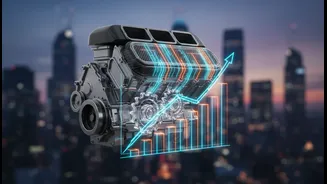
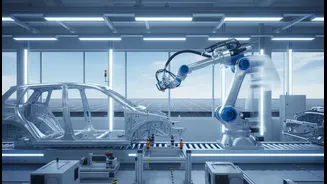
producing its latest one million vehicles in just 27 months, a feat that took 107 months for the first million. This near four-fold increase in pace is a direct result of integrating Industry 4.0 technologies like Artificial Intelligence, the Internet of Things (IoT), and advanced robotics. With approximately 1,500 robots and body shop automation levels exceeding 98%, the company has significantly boosted efficiency. This high-velocity output allows Mahindra to meet soaring domestic and export demand for its popular SUV portfolio while reducing the waiting time for customers.
Flexibility: The New Factory Superpower
Imagine a factory that can build a diesel SUV, an electric sedan, and a commercial vehicle on the same line, at the same time. This is the reality at Mahindra's Chakan facility, which operates seven multi-model assembly lines. This setup allows the plant to produce 19 different models and over 450 variants, making it incredibly responsive to shifting market tastes and diverse customer requirements. Instead of rigid lines dedicated to a single model, this flexible system can pivot production quickly. This agility is supported by autonomous mobile robots for material movement and digital traceability systems that ensure quality across a complex product mix. This ability to seamlessly switch between internal combustion engine (ICE) and electric vehicle (EV) production on shared infrastructure is a core part of Mahindra’s future-ready strategy, enabling it to adapt as India's automotive market evolves.
Powering Production with Green Energy
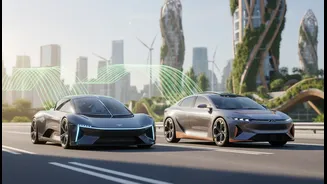
Mahindra's manufacturing revolution is not just smart, it's also green. The company is making a significant shift towards sustainable operations, with renewable power at the forefront. More than 50% of the Chakan plant's total energy requirement is now met through renewable sources. Critically, the entire manufacturing operation for its electric vehicles runs on 100% renewable energy. This commitment is part of a broader group strategy to achieve 100% renewable electricity use by 2030. The plant is also certified as 'Zero Waste to Landfill' and is water-positive, meaning it returns more water to the environment than it consumes through extensive rainwater harvesting. By embedding sustainability into its core operations, Mahindra is not only reducing its environmental footprint but also building a resilient and responsible business for the long term.
The Human-Technology Partnership
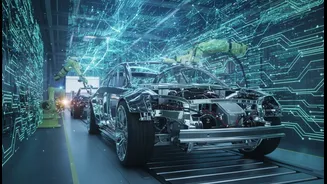
The rise of a 'smart factory' does not mean the end of human involvement. At Mahindra, technology is designed to augment, not replace, its workforce. The integration of AI and advanced robotics creates new roles and requires new skills. For instance, AI-powered systems are used to monitor shop-floor safety, including compliance with personal protective equipment, ensuring a safer working environment for employees. The use of digital manufacturing tools allows engineers to simulate and optimise production lines before a single part is physically built, reducing setup times and improving efficiency. This human-centric approach to automation ensures that the workforce evolves alongside the technology, creating a collaborative environment where expertise and innovation drive progress forward in tandem.