



The Science of the Lean
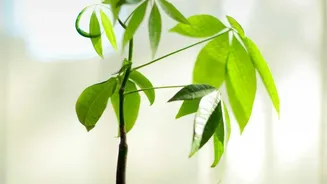
That determined lean towards the nearest window isn't just your plant being difficult; it's a natural survival instinct called phototropism. Plants depend on light for photosynthesis, the process of converting light into energy. To maximize this process,
they have an internal guidance system driven by a growth hormone called auxin. Auxin accumulates on the shadier side of the stem, causing the cells there to elongate faster than the cells on the sunny side. This differential growth makes the entire stem bend and reach towards the light, ensuring the leaves, which are like tiny solar panels, get as much exposure as possible. Over time, this results in the lopsided, uneven growth we often see in our indoor plants.
Why a Sudden Spin Is Stressful
Seeing a one-sided plant, it seems logical to simply turn it around so the neglected side can get some sun. However, a sudden 180-degree rotation can be a shock to the plant's system. Think of it this way: the plant has spent weeks, or even months, painstakingly arranging its leaves to perfectly capture light from one direction. When you abruptly spin it around, all that hard work is undone. The leaves that were once basking in the sun are now in the shade, and the plant must expend a tremendous amount of energy to reorient its entire structure. This sudden change can cause stress, leading to symptoms like drooping, yellowing leaves, or even leaf drop as the plant struggles to adapt. In some cases, a drastic shift in light can even stunt growth.
The Art of the Gentle Quarter-Turn
The key to balanced, healthy growth isn't a dramatic correction but a gentle, consistent routine. Most gardening experts recommend a simple quarter-turn on a regular basis. This method allows all sides of the plant to receive relatively even light exposure over time without causing undue stress. By making small, incremental changes, you allow the plant to adjust gradually, encouraging the stem to grow straight and the foliage to develop symmetrically. An easy way to remember is to tie the rotation to another plant care task. Many plant owners find success by giving their pots a quarter-turn every time they water them. This integrates the habit smoothly into your existing routine, ensuring consistency.
Creating a Rotation Schedule
While a quarter-turn at every watering is a great rule of thumb, the ideal frequency can vary. Plants in lower-light conditions might benefit from a turn every week or two, while those in very bright light may only need it every month. The goal is consistency. Pick a direction—clockwise or counter-clockwise—and stick with it. Some people find it helpful to place a small, discreet mark on the pot to keep track of the rotations. It's also important to know that not all plants appreciate being moved. Vining plants like some aroids (Monstera, Philodendron) often have a defined 'front' and 'back' and may not benefit from rotation. Similarly, flowering plants like orchids or Christmas cacti can be sensitive; rotating them after they've set buds can sometimes cause the buds to drop before they open. For most common foliage houseplants, however, slow and steady rotation is the path to a fuller, more balanced appearance.
Beyond Rotation: More Tips for Even Growth
Rotation is a powerful tool, but it's part of a larger picture of light management. If you don't have an ideal window, a grow light positioned directly above the plant can provide even, overhead light that eliminates the need for rotation altogether. You can also enhance light absorption by keeping your plant's leaves clean. A gentle wipe with a damp cloth removes dust that can block light, making photosynthesis more efficient. Finally, take a moment during your rotation routine to inspect your plant for any signs of pests or disease, allowing you to catch potential problems before they escalate.