






What is the Big Change?
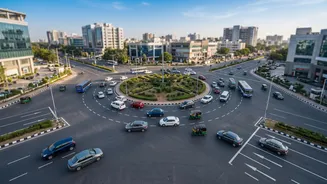
For years, Delhi's traffic has been managed by signals running on fixed timers, often leading to frustrating waits at empty junctions while other roads are choked with traffic. This is about to change. The government has greenlit a ₹1,789.52 crore Intelligent
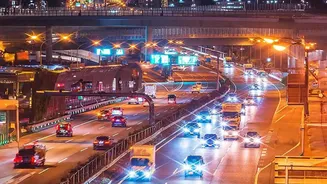
Traffic Management System (ITMS) that will add a 'brain' to the city's transport infrastructure. Instead of rigid cycles, the new system will use artificial intelligence to look at the actual traffic on the road and decide how long a light should stay green or red. This move aims to make traffic flow smoother and more efficient, directly tackling the daily congestion that plagues the national capital.
How the 'Smart' Signals Will Work
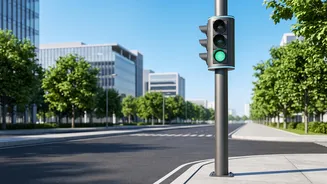
The ITMS is a network of cameras, sensors, and AI software working together. At its core is the Adaptive Traffic Control System (ATCS), which will be deployed at 1,092 locations. These systems gather live data on vehicle volume and speed. The AI then analyses this information to dynamically adjust signal timings. For example, if one road is heavily congested while a crossing road is clear, the system can automatically give a longer green light to the busier route. The plan is also to coordinate signals along major corridors, creating 'green waves' that allow for smoother transit with fewer stops. This real-time adaptability is designed to make the best use of the existing road network, which has struggled to keep up with the city's 7.1 million active vehicles.
The Impact on Your Daily Commute
The primary goal of this project is to improve the 'Ease of Living' for Delhi's residents by cutting down travel times and making commutes more predictable. One of the most significant features will be the creation of priority green corridors for ambulances and other emergency vehicles. Special sensors will allow these vehicles to communicate with signals, turning them green upon approach for a faster, clearer path. For the everyday commuter, the system will provide real-time information about congestion, accidents, and diversions through variable message signs and digital platforms, potentially including navigation apps. Studies in other cities using similar AI systems have shown significant reductions in travel time, sometimes by up to 25%.
Enhanced Safety and Enforcement
Beyond managing flow, the ITMS will also upgrade traffic rule enforcement. The project includes 1,029 automated enforcement locations. AI-powered cameras will be used to automatically detect a wide range of violations, including red-light jumping, speeding, driving without a seatbelt or helmet, and using a mobile phone while driving. The system will also help authorities identify stolen or 'hot-listed' vehicles and track repeat offenders, aiming to improve overall road safety. By automating enforcement, the system is expected to increase compliance and reduce accidents on Delhi's roads.
Project Timeline and Rollout
This massive overhaul will not happen overnight. The Delhi Police will implement the ITMS in three phases over 24 months. The first phase will focus on five major corridors: Ring Road, Outer Ring Road, Rao Tula Ram Marg, Teen Murti, and C-Hexagon. This initial stage involves setting up 250 adaptive signal junctions and 271 enforcement points within the first year. The project will then expand to cover a total of 42 identified traffic corridors across the city in subsequent phases. The entire implementation is expected to take two years, followed by a five-year period for operation and maintenance, with the Centre for Development of Advanced Computing (C-DAC) providing technical oversight.