




The Power of the Plank
The plank is a powerhouse of an exercise, celebrated for its simplicity and effectiveness. It is an isometric hold, meaning you engage your muscles without moving. This single exercise works a surprising number of muscle groups simultaneously, including
the deep core muscles like the transverse abdominis, the rectus abdominis (the 'six-pack' muscles), obliques, and even your glutes, back, and shoulders. A strong core is the foundation for almost every movement you make. It helps protect your back from injury, improves your posture, and enhances balance and stability. It’s no wonder that athletes like Saina Nehwal incorporate it into their training. The allure of a plank challenge is its clear path of progression, but the real victory isn't hitting a four-minute hold; it's perfecting the form that makes those minutes count.
Why Form Is More Important Than Time
The biggest misconception about the plank is that duration is the ultimate goal. In reality, holding a plank for three minutes with poor form is not only ineffective but can also be harmful. When your form breaks down—your hips sag, or your shoulders are misaligned—you shift the strain from your core to your lower back and shoulder joints. This can lead to pain and injury, defeating the purpose of the exercise. Experts agree that a 30-second plank with perfect form is far more beneficial than a two-minute one with a curved spine. The focus should always be on quality over quantity. The goal is to teach your core to stabilise your spine effectively; this is achieved through proper muscle engagement, not by simply gritting your teeth as the seconds tick by.
How to Perform the Perfect Plank
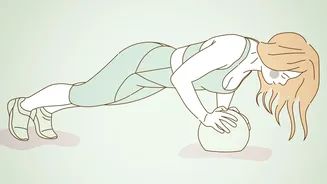
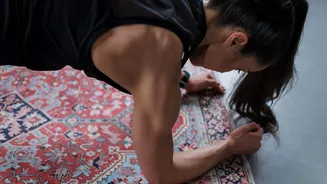
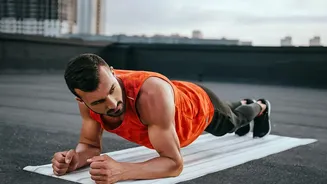
To get the most out of your plank, focus on getting the alignment right from the start. You can use a mirror or record yourself to check your form. First, get on all fours. If you're doing a forearm plank, place your elbows directly under your shoulders, with your forearms parallel to each other. Step your feet back one at a time to extend your legs, keeping your body in a straight line from your head to your heels. Your feet can be hip-width apart for more stability. Now, engage everything. Squeeze your glutes and brace your core as if you're about to be punched in the stomach. Tuck your pelvis slightly to prevent your lower back from arching. Keep your neck neutral by looking at the floor slightly ahead of your hands, not up or down towards your feet. Most importantly, remember to breathe steadily. Holding your breath will only cause you to fatigue faster.
Common Mistakes to Avoid
Even with the best intentions, it's easy to make small mistakes that compromise your plank. The most common error is letting your hips sag towards the floor. This is a sign that your core isn't engaged enough, and it puts significant pressure on your lower back. The opposite mistake is lifting your hips too high, turning your plank into a variation of a downward-facing dog. This takes the workload off your abs. Another frequent issue is dropping your head and rounding your upper back, which can strain your neck and shoulders. Your body should form a straight, solid line. Also, be mindful not to place your hands or elbows too wide, as this can strain your shoulder joints. Always ensure your elbows are stacked directly beneath your shoulders for proper support.
Building Your Own Safe Challenge
Inspired by Saina? You can create your own progressive plank challenge, safely. If you are a beginner, start by holding a plank for just 10 to 15 seconds with perfect form. Rest, and repeat for a few sets. It's better to do multiple short, perfect holds than one long, sloppy one. As you get stronger, gradually increase the hold time by a few seconds each week. If a full plank is too challenging, start with a modified version, such as a knee plank or an incline plank with your hands on a sturdy bench or wall. The key to progress is consistency and listening to your body. When you feel your form starting to falter, it’s time to stop, rest, and reset. True strength is built with patience and precision.