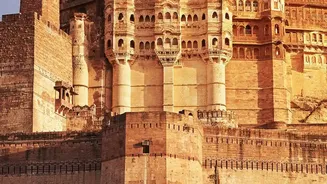






Mehrangarh Fort: The View from Above
Perched on a cliff 400 feet above Jodhpur, Mehrangarh Fort's grandeur is undeniable. But its soul isn't just in its imposing walls; it's in the details. Look closely at the entrance gate for the small, poignant handprints—a memorial to the royal women
who committed sati. Inside, the museum is one of India's best, housing a stunning collection of palanquins, weaponry, and miniature paintings. The real magic, however, is the panoramic view of Jodhpur's old city, a sea of blue houses stretching to the horizon, a sight that tells a story of community and caste that no single photograph can capture.
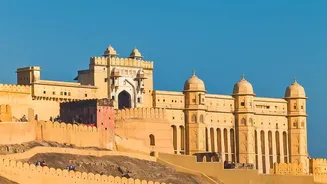
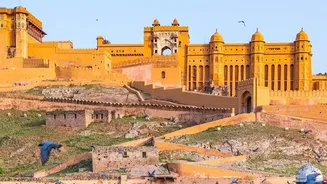
Amer Fort: The Secret Escape Route
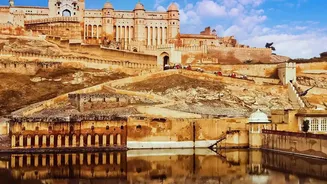
While the dazzling Sheesh Mahal (Mirror Palace) gets all the attention, Amer Fort’s genius lies deeper. This fort hides a secret tunnel connecting it to the nearby Jaigarh Fort, built as an escape route for the royal family during an attack. A portion of this underground passage is accessible to visitors, offering a thrilling glimpse into the strategic military mind of the Rajputs. Forget the elephant ride and instead, walk the path of ancient soldiers and fleeing royals. It’s a tangible connection to a history of warfare and survival that most tourists completely miss. The fort also features an evening light and sound show that narrates its rich history.
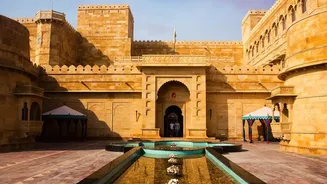
Jaisalmer Fort: The Living Citadel
This is no ruin; it's a living, breathing city. Jaisalmer Fort is one of the few “living forts” in the world, with roughly a quarter of the old city's population still residing within its golden sandstone walls. Built in 1156, its narrow, winding lanes are filled not with silent history, but with the buzz of daily life: shops, hotels, cafes, and homes where families have lived for generations. You can hear the whistle of a pressure cooker, see clothes drying on balconies, and browse markets selling traditional crafts. Staying overnight in one of its guesthouses offers an experience no museum can: falling asleep and waking up inside an 870-year-old fortress.
Golconda Fort: The Sound of Genius
Famous as the market for some of the world's most legendary diamonds, including the Koh-i-Noor and the Hope Diamond, Golconda's true marvel is its acoustic design. Stand at the main gate, the Fateh Darwaza, and clap. A person standing at the citadel’s highest point, almost a kilometre away, can hear it clearly. This acoustic feat served as an ingenious warning system, allowing guards to signal an approaching enemy instantly. It’s an interactive piece of history, an engineering marvel that demonstrates how sound was weaponised for defence long before modern technology. The fort was the capital of the Qutb Shahi dynasty and a center for a flourishing diamond trade.
Agra Fort: The Gilded Prison
Often seen as a secondary attraction to the Taj Mahal, Agra Fort is where the other half of that famous story unfolded. This was not just a fortress but the primary residence of the Mughal emperors until they shifted the capital to Delhi. More poignantly, it became the prison of Shah Jahan. Deposed by his son Aurangzeb, the emperor spent the last eight years of his life under house arrest here. You can visit the Musamman Burj, the octagonal marble tower where he was confined. From its balcony, he would gaze across the river at the Taj Mahal, the tomb of his beloved wife. It transforms the fort from a military structure into a site of profound personal tragedy.
Red Fort: The Stream of Paradise
Beyond its famous red sandstone walls and its role as the stage for India's Independence Day address, the Red Fort hides an incredible feat of engineering. The Nahr-i-Bihisht, or 'Stream of Paradise', was a channel of water diverted from the Yamuna River that flowed through the centre of the fort's private apartments. This intricate system cooled the lavish marble pavilions, creating a natural form of air-conditioning for the Mughal court during Delhi's scorching summers. Originally known as Qila-e-Mubarak ('the Blessed Fort'), its palaces were once decorated with precious stones, including the Kohinoor diamond which was part of Shah Jahan's throne.
Chittorgarh Fort: The Fortress of Valour
Sprawling across nearly 700 acres, Chittorgarh is less a single fort and more a fortified city, and a UNESCO World Heritage Site. Its story is not just one of architecture but of legendary Rajput pride and sacrifice. The fort is most famous for the tale of Rani Padmini, whose beauty led to a devastating siege by Alauddin Khalji. Her story, and those of the other women who committed jauhar (mass self-immolation) to avoid capture, echoes through its palaces and temples. Visiting landmarks like the Vijay Stambh (Tower of Victory) is not just about appreciating the structure, but about understanding the fierce code of honour that defines Rajput history.