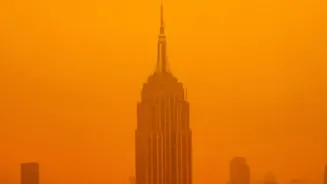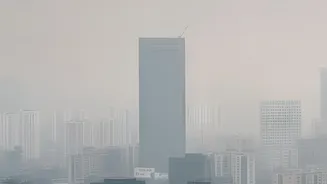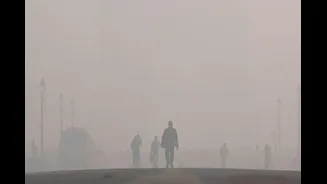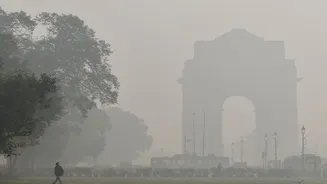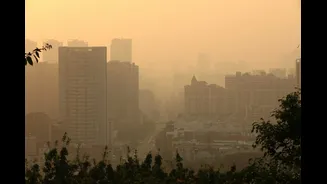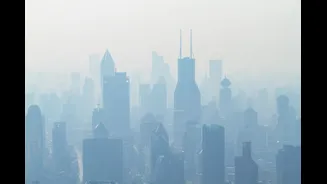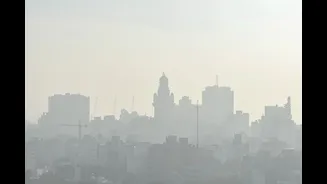






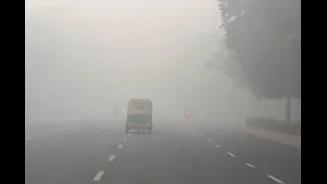

Another November in Delhi brings the familiar haze and health warnings. You check the forecast, but tomorrow's air quality prediction seems to shift by the hour. Why is it so hard to get a straight answer on how bad the air will be?
The Science Behind the Forecast
Air quality forecasting
in Delhi, primarily done by systems like the System of Air Quality and Weather Forecasting and Research (SAFAR), is a complex process. These models act like sophisticated calculators, taking in massive amounts of data to predict the Air Quality Index (AQI), often up to 72 hours in advance. The key ingredients include real-time data from monitoring stations across the city, meteorological parameters like wind speed and temperature, and vast databases called 'emission inventories' that estimate pollutants from various sources like traffic, industry, and power plants. This data is fed into a supercomputer which runs chemical transport models to simulate how pollutants will disperse and transform in the atmosphere. The goal is to provide a clear, colour-coded forecast that helps both the public and policymakers make informed decisions.
Why Weather Is the Biggest Wildcard
The single greatest source of uncertainty in any air quality forecast is the weather. During Delhi's winter, meteorological conditions become particularly hostile to clean air. Key among these is 'temperature inversion', where a layer of warm air traps colder, denser air—and all its pollutants—close to the ground like a lid on a pot. Compounding this are low wind speeds that fail to blow the toxic soup away. Forecasters must predict the 'mixing height', which is the altitude to which pollutants can rise. A small error in predicting wind direction, wind speed, or the exact height of this inversion layer can lead to a huge difference between the forecasted AQI and the actual reading, making the air quality much better or, more often, much worse than predicted.
The Problem of Counting Polluters
A forecast is only as good as its inputs, and this is where 'emission inventories' become a major challenge. These are detailed estimates of all pollution sources, but they are incredibly difficult to keep updated in real-time. A 2025 study highlighted that forecasting systems often rely on outdated emission inventories, some from as far back as 2018 for Delhi and 2016 for surrounding NCR districts. This means the models may not accurately reflect the current number of vehicles on the road, the operational status of industries, or the extent of construction dust. While models account for major sources like transport, which can contribute around 19% of PM2.5, they struggle to capture the dynamic and chaotic nature of a sprawling metropolis, leading to consistent underprediction of pollution levels.
The Unpredictable X-Factor: Farm Fires
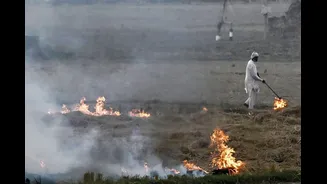
Stubble burning in the neighbouring states of Punjab and Haryana is a notorious contributor to Delhi's November smog. For forecasters, it’s a massive variable. The contribution of farm fires to Delhi's PM2.5 can swing dramatically, from less than 2% on one day to over 20% or even higher on the next, depending on the number of fires and wind direction. While satellites can detect fire counts, predicting the exact atmospheric path the smoke will take and how much of it will impact Delhi remains a significant challenge. This trans_boundary pollution is an external shock to the system that models struggle to perfectly integrate, often causing forecasts to be revised as wind patterns and fire intensity change.
What This Means For Your Health
Given the uncertainty, residents should treat the daily AQI forecast as a guide, not a guarantee. On Thursday morning, Delhi's AQI was already in the 'Very Poor' category at 314, with projections suggesting it could enter the 'Severe' category by Friday. The current Stage III of the Graded Response Action Plan (GRAP) reflects this risk. Health advisories recommend that everyone, especially vulnerable groups like children, the elderly, and those with respiratory conditions, should avoid outdoor activity. When going out is unavoidable, wearing a wellfitted N95 mask is crucial. Because forecasts can fluctuate, it's wise to focus on the overall trend and official health alerts rather than small dayto day number changes. The consistent 'Very Poor' to 'Severe' conditions are a clear signal to take precautions, regardless of any exact predicted number.