




The Race for Compute Capacity
The demand for artificial intelligence is fuelling a construction boom of staggering proportions across India. At the heart of this expansion are data centers, the physical brains of the digital world. Just a few years ago, in 2020, India’s total data center capacity
was a modest 375 megawatts (MW). By the first half of 2026, that figure had already surged to 1.8 gigawatts (GW), a nearly fivefold increase. Yet, this is only the beginning. Projections suggest this capacity could quadruple to over 7 GW by 2030. This explosive growth is driven by the sheer computational muscle required to train and run advanced AI models. These are not your standard data centers; they are high-density 'AI factories' packed with thousands of specialised Graphics Processing Units (GPUs). Recognizing this, the government's flagship IndiaAI Mission is working to build a robust AI computing infrastructure, making tens of thousands of GPUs available to startups, researchers, and companies at subsidized rates to foster innovation.
The Unseen Cost: A Power Crisis
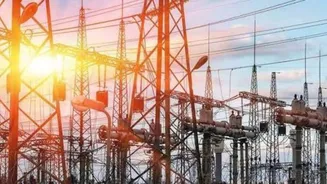
While building data centers is a visible sign of progress, the invisible challenge is securing the electricity to run them. AI computing is incredibly energy-intensive, and experts now agree that power availability—not the availability of computer chips—is the primary bottleneck for AI expansion in India and globally. India's Ministry of Power projects that data centers will demand a colossal 13.56 GW of electricity by 2032, a figure that is now factored into national transmission planning. To put that in perspective, this would raise the sector's share of India's total electricity consumption from less than 1% today to as much as 3% by 2030. This surge is converting electricity into a strategic asset, where access to reliable power dictates the pace of a nation's AI development. The global race for AI supremacy has quickly become a race for energy.
Government and Industry Join Forces
To tackle this monumental task, a nationwide mobilization is underway, combining public policy with private capital. The central government has allocated over ₹10,300 crore to its IndiaAI Mission, aiming to create a complete ecosystem for AI development. On the ground, this is being matched by enormous private sector investment. Corporate giants like Reliance and Adani Group have committed over $210 billion to this sector. Reliance is collaborating with global tech leader Nvidia to build AI infrastructure and develop large language models trained on India’s diverse languages, with plans for AI-ready data centers eventually expanding to 2,000 MW. Other key players like Yotta, Larsen & Toubro, and E2E Networks are also establishing 'AI factories' equipped with cutting-edge Nvidia technology, building out a sovereign cloud infrastructure to serve domestic needs and global clients. State governments in Gujarat, Uttar Pradesh, and Andhra Pradesh are competing fiercely, launching new policies with lucrative incentives to attract these multi-billion dollar projects.
Bottlenecks and Smarter Grids
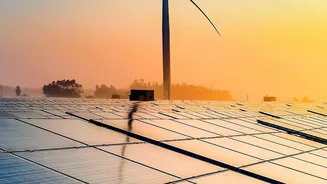
Simply generating more power isn't enough. India faces significant hurdles in its energy infrastructure. While the country has made impressive strides in renewable energy, its grid still heavily relies on coal for over 70% of its actual electricity generation. Furthermore, transmission and grid stability remain critical bottlenecks, with a significant portion of renewable capacity often stranded without adequate infrastructure to deliver it where it's needed most. This is where AI could, ironically, become part of its own solution. AI-driven technologies are increasingly being deployed to create 'smart grids'. These systems can better forecast electricity demand, optimize the flow of power, predict maintenance needs, and seamlessly integrate variable renewable sources like solar and wind into the national grid. By making the entire power system more efficient and resilient, AI can help manage the immense new load that it simultaneously creates, turning a vicious cycle into a virtuous one.