





The Holy Trinity of Indian Sweets
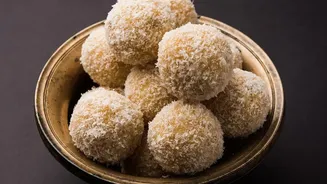
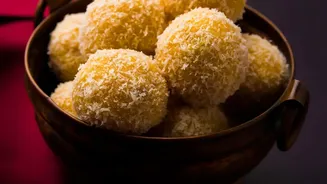
Before we journey across the country, it's worth appreciating why these three ingredients are so foundational. Rice, a staple grain, provides the body and structure. Coconut, revered in many parts of India, offers a rich, aromatic flavour and tender texture.
Jaggery, an unrefined sugar, lends a deep, caramel-like sweetness that is both complex and comforting. Together, they create a canvas for culinary creativity, resulting in sweets that are steamed, fried, or boiled, each telling a story of its region. They are central to festivals and rituals, symbolizing purity, prosperity, and the sweetness of life.
Maharashtra’s Beloved Modak
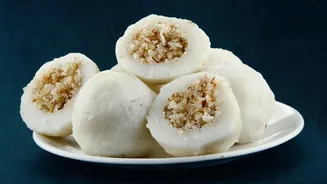
Arguably the most famous of these sweets, the Modak is a steamed rice-flour dumpling with a delicate, pleated shape. Inside, a heavenly mixture of freshly grated coconut and jaggery, often scented with cardamom, awaits. The outer casing is soft and melts in your mouth, giving way to the sweet, textured filling. Modaks are synonymous with Ganesh Chaturthi, where they are prepared as a special offering (prasad) to Lord Ganesha, who is believed to adore them. While the steamed version, known as Ukadiche Modak, is traditional, fried versions also exist, offering a crispier alternative.
The Southern Star: Kozhukattai
Travel south, and you'll find the Kozhukattai, a close cousin to the Modak. Popular in Tamil Nadu, Kerala, and other southern states, these are also steamed rice-flour dumplings filled with a coconut and jaggery mixture. While they share the same core ingredients, their shape is often simpler and rounder than the pleated Modak. Kozhukattai are also a festive staple, prepared for Vinayaka Chaturthi and other special occasions. Some variations even exist in savoury forms, but the sweet version, known as Thengai Pooranam Kozhukattai, remains a perennial favourite.
The Eastern Delight: Pitha
In Eastern India, particularly Bengal, Odisha, and Assam, the concept of a rice-flour parcel filled with coconut and jaggery is known as Pitha. This category of sweets is incredibly diverse. One popular example is the Bengali Patishapta, which is less of a dumpling and more of a soft, thin crepe made from rice flour. The crepe is rolled around a coconut-jaggery filling, creating a wonderfully soft and addictive treat, especially enjoyed during the winter harvest festival of Poush Parbon. In Odisha, you'll find Manda Pitha, which is a steamed pitha very similar in form to a modak, enjoyed during festivals like Raja Sankranti.
Andhra’s Fried Treasure: Ariselu
Breaking from the steamed tradition, Ariselu from Andhra Pradesh and Telangana is a deep-fried delicacy. Also known as Adhirasam in Tamil Nadu and Kajjaya in Karnataka, this sweet is made from a dough of rice flour and jaggery syrup. Small, flattened discs of this dough are often coated in sesame seeds and then deep-fried until they are golden brown on the outside and wonderfully soft and chewy on the inside. Unlike steamed dumplings, the preparation of the jaggery syrup for Ariselu is a crucial step that determines the final texture, making it a treasured skill passed down through generations.