







The Problem with the Chair
Our bodies are designed for movement, but the modern workday often involves hours of sitting. This prolonged sitting wreaks havoc on hip mobility in two key ways. First, it keeps your hip flexor muscles—the ones at the front of your hips—in a constantly
shortened and contracted position. Over time, these muscles become tight and stiff. Second, while your hip flexors are tight, your gluteal muscles (your glutes) become weak and inactive from disuse. This combination of tight front muscles and weak back muscles creates a significant imbalance. This imbalance can pull your pelvis out of alignment, leading to lower back pain, reduced range of motion, and that familiar feeling of being “locked up” when you try to stand or walk.
Yoga as the Counter-Movement
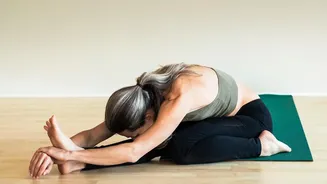
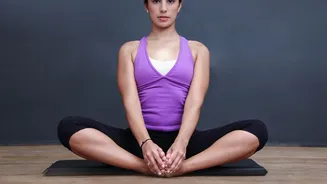
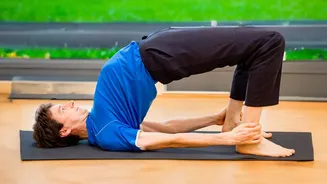
Yoga provides a direct and effective solution to the problems caused by sitting. Its principles are fundamentally opposed to the static, closed posture of chair-life. Yoga focuses on opening the body, particularly the hips, through targeted stretches and poses. By moving the hips through their full range of motion, yoga helps lengthen those chronically tight hip flexors. Simultaneously, many yoga poses actively engage and strengthen the glutes, helping to correct the muscular imbalance caused by a desk job. This isn't just about flexibility; it's about restoring proper function. By encouraging blood flow, releasing muscle tension, and re-activating dormant muscles, yoga serves as a powerful reset for your hips, improving posture and reducing pain.
Your At-Desk Hip Mobility Toolkit
You don't need a yoga mat or a full hour to start reclaiming your hip mobility. These simple, discreet stretches can be done right at your desk throughout the day. 1. Seated Pigeon Pose (Figure-Four Stretch): While sitting, cross your right ankle over your left knee, keeping your right foot flexed to protect the knee. Sit up tall. For a gentle stretch, stay here. To deepen it, gently press down on your right knee or hinge forward at the hips, keeping your back straight. Hold for 30 seconds and repeat on the other side. 2. Seated Hip Flexor Stretch: Scoot to the edge of your chair. Extend one leg straight back behind you, with your toes on the floor. Keep your chest lifted and gently press your hips forward until you feel a stretch in the front of your hip and thigh. Hold for 30 seconds per side. 3. Glute Squeeze: This is the most discreet exercise of all. While seated, simply squeeze your gluteal muscles, hold for 5-10 seconds, and release. Repeat 10-15 times. This helps 'wake up' the muscles that tend to go dormant while sitting.
Building a Habit of Movement
While these poses are incredibly beneficial, the ultimate goal is to integrate more movement into your entire day. The negative effects of sitting are cumulative, but so are the positive effects of regular movement. Set a timer to remind yourself to stand up and stretch every 30 to 60 minutes. Even a short walk to get water or a quick stretch in the breakroom can make a difference. Think of it as creating "movement snacks" throughout your day. Combining these small habits with your desk yoga poses will help counteract the sedentary nature of your job, keeping your hips mobile, reducing your risk of pain and injury, and improving your overall well-being. Consistency is more important than intensity; a few minutes every day is far more effective than one long session per week.