






Gingee Fort, Tamil Nadu
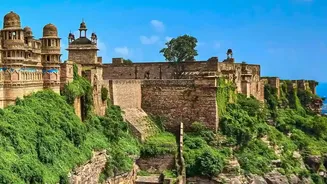
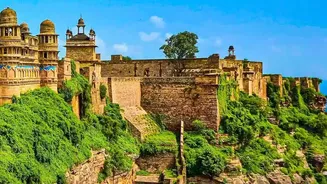
Often called the "Troy of the East," Gingee Fort is a sprawling complex across three hills, a testament to the military and architectural prowess of the Vijayanagara Empire. Its design is a marvel of strategic fortification, with interconnected pathways
and massive granite walls. The architecture is a fascinating mix, primarily showing Dravidian and Vijayanagara styles in its temples and mandapas. However, structures like the Kalyana Mahal exhibit a distinct Indo-Islamic influence from the Nayaka rulers who later controlled it, making Gingee a layered chronicle of South Indian history.
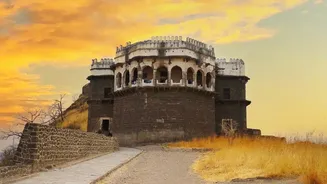
Daulatabad Fort, Maharashtra
Originally known as Devagiri, this formidable fortress is a masterclass in medieval military engineering. Built in the 12th century by the Yadava dynasty, its primary defence is the landscape itself—a 200-metre-high conical hill with sheer rock cliffs. The genius of Daulatabad lies in its treacherous access: a single, narrow path, multiple false gates, and a labyrinthine dark passage called the Andheri, designed to confuse and trap invaders. While its origins are Hindu, it was famously renamed by Muhammad bin Tughluq, and its structures reflect a blend of Yadava, Tughlaq, and Bahmani influences.
Bidar Fort, Karnataka
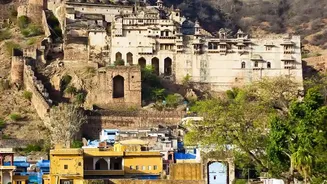
A stunning example of Deccan Sultanate architecture, Bidar Fort showcases a heavy Persian influence, a hallmark of the Bahmani dynasty who made Bidar their capital in the 15th century. Architects and engineers from Persia and Turkey were invited to contribute to its design, resulting in a unique blend of styles. The fort is renowned for its innovative triple-layered moat defence system and its grand gateways. Inside, monuments like the Rangin Mahal (Painted Palace), with its lustrous tile work and mother-of-pearl inlay, and the Mahmud Gawan Madrasa, highlight a distinct Persian aesthetic rarely seen elsewhere in India.
Kangra Fort, Himachal Pradesh
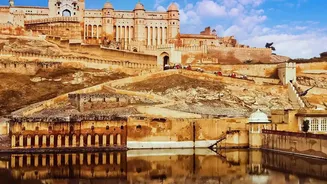
Believed to be the oldest fort in the Himalayas, Kangra Fort's history stretches back thousands of years. Built by the indigenous Katoch dynasty, which traces its lineage to the ancient Trigarta Kingdom mentioned in the Mahabharata, its architecture is a rugged, pragmatic response to its mountainous setting. Situated between two rivers, the fort's strength comes from its imposing black stone walls and a series of strategically placed gates. Though it was captured by Mughal Emperor Jahangir and later damaged by an earthquake, its surviving temples and ramparts speak to a pre-Mughal Rajput style unique to the hills.
Murud-Janjira, Maharashtra
Rising from an island in the Arabian Sea, Murud-Janjira is a formidable marine fort that remained unconquered throughout its history. Its unique oval shape and construction are credited to the Siddis, rulers of African descent who established a powerful naval presence on the Konkan coast. Built in the 16th century, the fort’s architecture is pure military function, with 19 rounded bastions designed to repel cannon fire from the sea. The main gate is cleverly hidden and only visible at close range. Inside its 40-foot-high walls, the ruins and freshwater lakes are a testament to the Siddi dynasty's engineering skill.
Golconda Fort, Telangana
Originally a mud fort under the Kakatiya dynasty, Golconda was transformed into a massive granite fortress by the Qutb Shahi sultans. Its architecture is a brilliant synthesis of Hindu, Persian, and Deccani styles. Golconda is famous for its advanced acoustic system; a clap at the main gate can be heard at the citadel's highest point, a kilometre away, which served as a warning system. The fort was also the center of a flourishing diamond trade. Its majestic halls, fortified gateways, and ingenious water supply systems showcase the opulence and strategic mind of the Deccan Sultanates.
Bekal Fort, Kerala
The largest fort in Kerala, Bekal Fort’s most distinctive feature is its unique keyhole shape, hugging the coastline of the Arabian Sea. Built in the mid-17th century by Shivappa Nayaka of the Keladi dynasty, it was primarily a defensive military station, not a palace. Its architecture reflects this purpose, with massive laterite walls, bastions offering panoramic sea views, and peepholes designed for aiming at enemies at varying distances. While it changed hands between local rulers, Hyder Ali, and the British, its core design is a prime example of coastal defence architecture from the Nayaka period.