



An End to the Unpacking Ritual
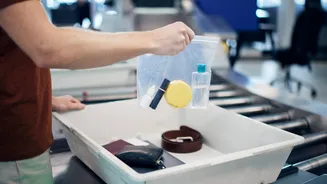
For years, the security checkpoint has been a point of stress for travellers, involving a frantic unpacking of carry-on luggage to separate electronic devices and liquids into grey trays. This process, a standard at airports worldwide, is now being phased
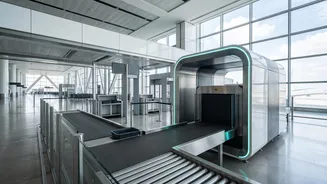
out at Dubai International (DXB). The airport is in the process of a major technological upgrade, installing new-generation scanners that make the entire experience faster and significantly less intrusive. According to Dubai Airports CEO Paul Griffiths, the goal is simple: to make the journey through one of the world's busiest hubs "slicker, quicker, faster, and more convenient." For passengers, this means no longer having to routinely remove laptops, tablets, and liquids from their bags during the screening process.
How the New Technology Works
The magic behind this streamlined process lies in Computed Tomography (CT) technology, similar to what is used for medical scans. The advanced machines, specifically the HI-SCAN 6040 CTiX model, create detailed 3D images of a bag’s contents, which security personnel can digitally rotate and inspect from any angle. This high-resolution imaging allows screeners to effectively 'see through' cluttered bags, easily identifying the shape and density of different items. Unlike traditional 2D X-ray scanners, which can be obscured by laptops and other dense objects, CT technology provides a clear, comprehensive view, removing the need for passengers to physically separate their belongings. Some reports also note the system uses artificial intelligence to help flag potential threats more efficiently than manual checks.
What This Means for Your Next Trip
The most significant benefit for travellers is convenience. Soon, you will be able to leave large electronics and liquids securely packed inside your carry-on bag. This not only speeds up the individual passenger's journey but also dramatically improves the overall flow of people through security checkpoints, reducing queues and wait times. The changes could even extend beyond just laptops and liquids. Officials have stated the new technology is also intended to reduce the need for passengers to remove items like shoes and belts. However, it is crucial to note that this is a gradual rollout. While the machines are already being installed, the transition is not yet complete across all terminals. Passengers should still be prepared to follow the instructions of security staff at their specific lane, as the old procedures may still be in place in some areas.
The Rollout Plan and What to Expect
Dubai Airports began installing the new scanners in 2025, with a contract awarded to technology company Smiths Detection to equip Terminals 1, 2, and 3. Trials of the equipment started in Terminal 3, the hub for Emirates, with the aim of completing a full implementation across the entire airport. While some earlier reports targeted late 2026 for a full rollout, the process is described as a "gradual, ongoing programme of continuous upgrade." This means that for the time being, travellers will encounter a mix of old and new systems. The key takeaway is that the 100ml liquid container rule has not changed. Even with the new scanners, passengers cannot carry liquid containers with a capacity of more than 100ml in their hand luggage. The difference is that these small containers can remain inside the bag during screening.