

In a feat of engineering that looked like science fiction, SpaceX has successfully caught its Starship spacecraft with giant mechanical arms, a historic first that changes the economics of space travel. But what does this mean for the future?
A Catch for the History Books
On Saturday,
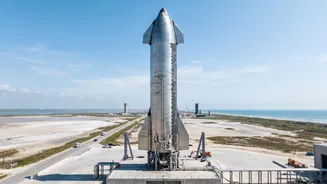
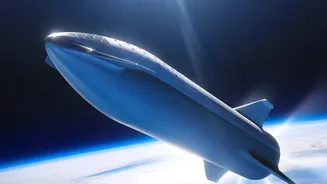
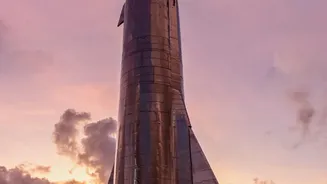
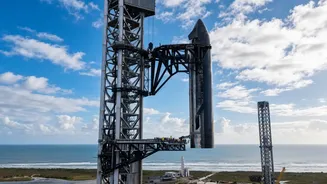
November 14, 2026, after a 22.5-hour mission that saw it circle the Earth 14 times, the Starship upper stage, known as Ship 42, descended toward its launch site in Texas. Instead of landing on legs, the 171-foot-tall vehicle hovered precisely between two giant arms on the launch tower. These arms, nicknamed 'chopsticks', closed around the spacecraft, securing it in mid-air. This was the defining moment of Starship's 15th test flight and the first time an orbital-class upper stage has ever been recovered this way. While the achievement was met with cheers, the mission was a partial success; the Super Heavy booster that launched the ship aborted its own catch attempt due to a low fuel alarm and was lost in the Gulf of Mexico.
Meet 'Mechazilla': The Rocket Catcher
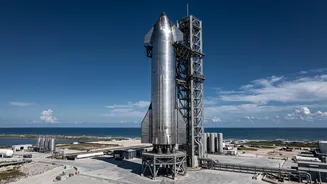
The star of the recovery is the launch tower itself, nicknamed 'Mechazilla'. Far from a simple launch platform, it's an integral part of the reusable system. The tower's 'chopstick' arms are massive steel structures designed to catch the returning rocket stages at reinforced hard points near the top of the vehicle. This maneuver is guided by an array of advanced sensors and autonomous control systems that track the descending rocket with immense precision. The entire process is automated, as there is no time for human intervention. By catching the rocket, SpaceX eliminates the need for heavy landing legs on the vehicle, saving weight and complexity. More importantly, the tower can then lower the rocket directly onto the launch mount, drastically speeding up the process for inspection, refueling, and reflight.
The Holy Grail: Full, Rapid Reusability
The ultimate goal for SpaceX is not just reusing rockets, but doing it quickly and cheaply, similar to how commercial aircraft operate. While its Falcon 9 rocket pioneered the reuse of first-stage boosters, the upper stages are still discarded. Starship is designed to make both its Super Heavy booster and the Starship spacecraft fully reusable. Catching the upper stage was what SpaceX called the 'missing link' and the 'holy grail of spaceflight'. Achieving full reusability could fundamentally change the economics of space access, eliminating the largest cost driver—building new hardware for every mission. This could enable a launch cadence that is unheard of today, with CEO Elon Musk envisioning thousands of flights per year.
What Comes Next? Reflight and Refinement
With the successful recovery of Ship 42, the next major milestone is demonstrating reflight. Elon Musk has stated that the vehicle appears to be in great condition and could potentially be reflown after just a few weeks of refurbishment. This would be another first for the program. Engineers will now meticulously inspect the entire vehicle, especially its thousands of heat shield tiles, to assess its condition after re-entering the atmosphere from orbital speeds. The failed booster recovery also highlights a key challenge that must be solved before the entire system is proven reliable. SpaceX is still investigating the root cause of the fuel anomaly that led to the booster's loss. Proving that both stages can be caught and reflown reliably is the next major hurdle on the path to making humanity a multi-planetary species.