
A Celestial Triptych
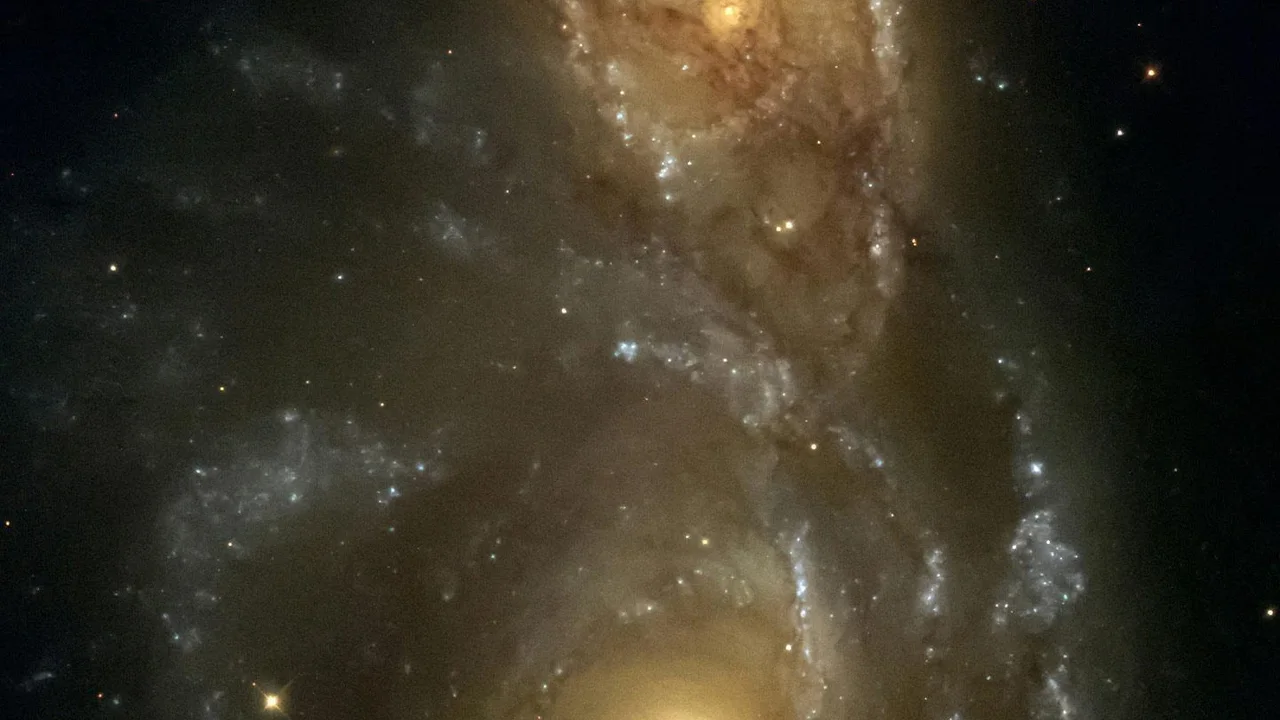
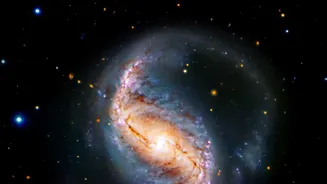
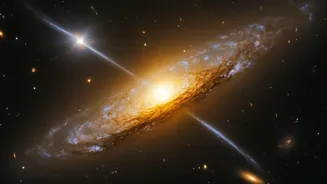
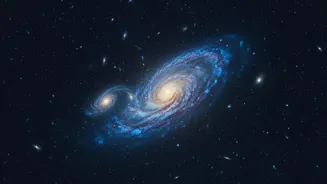
The image, featured as NASA's Astronomy Picture of the Day for August 10, 2026, vertically arranges three sets of galactic pairs, each telling a different story of interaction. At the top, we see a pair that includes NGC 4650A, a fascinating polar ring
galaxy whose structure suggests a collision in its distant past. The middle pair appears close, but astronomers believe their relative speeds make a current interaction unlikely. It's the bottom pair, NGC 4622A and NGC 4622B, that shows an active, ongoing merger—a gravitational embrace that will likely result in a single, larger galaxy in about a billion years. All of these subjects are likely members of the vast Centaurus Galaxy Cluster.
The Science of a Cosmic Collision
When galaxies collide, it's not a demolition derby of stars. Instead, it's a gravitational event of immense scale. The vast distances between individual stars mean that direct star-on-star collisions are incredibly rare. The real action is in the gravitational tug-of-war that disrupts and reshapes the galaxies entirely. As massive clouds of interstellar gas and dust within each galaxy are compressed by the interaction, it can trigger a furious burst of star formation, a phenomenon known as a starburst. This process can create new stars at a rate many times that of a quiet galaxy like our own Milky Way. These interactions are a fundamental engine of cosmic evolution, helping to build larger, more massive galaxies over billions of years.
Creative Destruction
While some mergers ignite star formation, the process is complex and can also have the opposite effect. The immense energy released can heat gas to temperatures so high that it can no longer collapse to form new stars. Furthermore, the supermassive black holes lurking at the center of most galaxies get a feast. The merger funnels gas and stars toward the galactic core, feeding the black hole and sometimes triggering the birth of an Active Galactic Nucleus (AGN) or quasar, which can blast out tremendous amounts of energy and radiation, further influencing the evolution of the newly-formed galaxy. The recent Webb Telescope images of Centaurus A, itself the remnant of a past merger, show how these events leave scars and complex structures that last for billions of years.
A Glimpse into Our Own Future
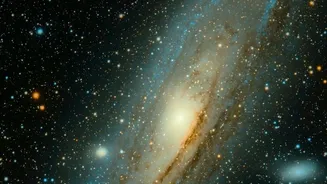
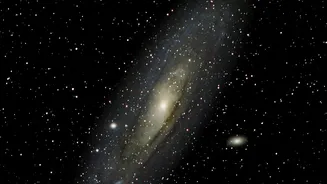
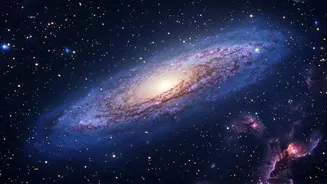
Studying galactic mergers is not just an academic exercise; it's a preview of our own cosmic destiny. The Milky Way is not an island universe. It is currently interacting with and absorbing smaller satellite galaxies. More dramatically, our galaxy is on a collision course with our largest galactic neighbor, the Andromeda Galaxy. In about 4.5 billion years, the two will begin a merger process that will unfold over hundreds of millions of years, eventually creating a new, massive elliptical galaxy that some astronomers have dubbed "Milkomeda". Observing pairs like NGC 4622A and NGC 4622B provides a blueprint for what this distant future might look like.