


The JCPOA: A Modern Case Study
The most prominent recent example is the 2015 Joint Comprehensive Plan of Action (JCPOA), or the Iran nuclear deal. Brokered by the Obama administration along with other world powers, it lifted crippling economic sanctions on Iran in exchange for strict
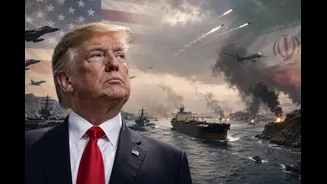
limits on its nuclear program. For a time, it appeared to be a landmark achievement. However, critics in the US argued it didn't address Iran's ballistic missile program or its support for regional proxies. In 2018, President Donald Trump unilaterally withdrew the United States from the accord, calling it a "terrible one-sided deal" and reimposed sanctions. This move highlighted a core problem: an agreement made by one US president could be easily undone by the next, leaving little stability or long-term trust.
A Legacy of Deep-Seated Mistrust
Today's diplomatic failures are built on a foundation of decades of mutual animosity. For many in Iran, the mistrust dates back to the 1953 CIA-backed coup that overthrew a democratically elected prime minister. For the United States, the 1979 Islamic Revolution and the subsequent 444-day hostage crisis at the US embassy in Tehran became a defining trauma. This history has created powerful narratives in both countries that frame the other as an implacable foe. Iran’s leadership often portrays negotiations as a form of resistance against Western pressure, while many in Washington view the Iranian government as inherently untrustworthy and duplicitous. This fundamental lack of faith means both sides often interpret the other's actions in the worst possible light, making compromise incredibly difficult.
Domestic Politics as a Deal-Breaker
Both Washington and Tehran are hamstrung by intense domestic political pressures. In the United States, policy toward Iran is a deeply partisan issue. Any deal made by a Democratic president is likely to face fierce opposition from Republicans, and vice-versa. This ensures that no agreement is ever truly secure beyond a single presidential term. In Iran, a similar dynamic plays out between pragmatic or reformist factions who may see value in diplomacy and hardliners, including the powerful Islamic Revolutionary Guard Corps (IRGC), who are deeply suspicious of the West and view compromise as a sign of weakness. This internal tug-of-war means that even when negotiators reach a consensus, it can be undermined back home by powerful political actors who benefit from continued confrontation.
The 'Everything or Nothing' Problem
Another major hurdle is the scope of the negotiations. The JCPOA was intentionally focused on the nuclear issue to make a deal achievable. However, its critics consistently pointed to its failure to address other contentious issues, such as Iran's ballistic missile program, its human rights record, and its support for groups like Hezbollah and Hamas. When the US demands that a deal cover all of these issues, Iran views it as an attempt at regime change. When a deal is narrowly focused, it's criticized in the US as being too weak. This leaves negotiators in a difficult position, caught between trying to solve a specific problem and being pressured to solve all problems at once, which is often an impossible task.
Influence of Regional Rivals
It’s impossible to understand US-Iran dynamics without considering the regional context. Key US allies, particularly Israel and Saudi Arabia, view Iran as a primary existential threat. Both nations have historically opposed diplomatic rapprochement between Washington and Tehran, fearing it would empower their rival. They have actively lobbied against deals like the JCPOA, arguing that sanction relief would only allow Iran to increase funding for its destabilizing activities in the region. This external pressure from crucial allies adds another layer of complexity for any US administration attempting to forge a lasting peace, as they must balance the goal of non-proliferation with the security concerns of their regional partners.