





The 'Doomsday Glacier' Explained
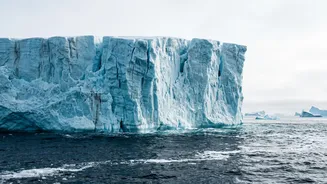
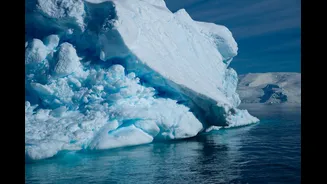
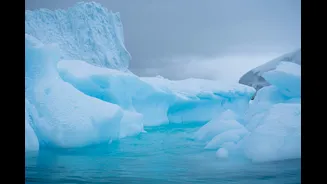
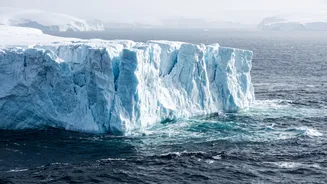
Thwaites is one of the widest glaciers on Earth and it is losing ice at an alarming rate. It currently contributes to around 4% of annual global sea-level rise. The reason it earns its terrifying nickname is not just due to its own melt, but its role
as a natural dam. It acts as a plug, holding back the rest of the West Antarctic Ice Sheet, which contains enough ice to raise global sea levels by several metres. A total collapse of Thwaites alone could lead to a sea-level rise of about 65 centimetres, or over two feet, fundamentally redrawing the world map.
The Critical 'Grounding Zone'
To understand the new findings, we must first understand the glacier's most vulnerable point: the grounding zone. This isn't a simple line, but a wide area where the glacier lifts off the seabed and begins to float. Think of it as the boundary between the ice resting on solid ground and the ice floating on the ocean. This zone is critical for stability. Warm, salty ocean water can intrude into this area, melting the glacier from underneath. As the grounding zone retreats further inland, it exposes more of the glacier's base to this warm water, creating a dangerous feedback loop that accelerates melting.
What The New Research Uncovered
Recent research published in 'Nature Communications' has provided a much more detailed picture of this grounding zone. Scientists from the University of California, Irvine, and NASA's Jet Propulsion Laboratory found that previous models were underestimating the situation. They discovered that as tides rise and fall, warm seawater is being pumped several kilometres further under the glacier than previously accounted for. This process, happening in a wide 'grounding zone' rather than at a fixed 'grounding line', is causing much more vigorous melting at the base of the glacier.
A Doubling of Projections
By incorporating this more complex 'tidal pumping' mechanism into their models, the researchers came to a startling conclusion. Even without any further increase in global warming, the Thwaites Glacier's contribution to sea-level rise by the year 2100 could be up to 30 millimetres (1.2 inches). This figure is roughly double what earlier, simpler models had projected. The study highlights that the processes driving the glacier's retreat are more aggressive than we knew. It suggests there is a 60% chance the glacier will become 'unpinned' from a key undersea ridge by the end of the century, which would likely speed up its retreat even more.
Why Antarctica's Ice Matters to India
An ice sheet melting thousands of kilometres away might seem like a distant problem, but its consequences are direct and severe for India. With a coastline spanning over 7,500 kilometres, India is highly vulnerable to rising sea levels. An accelerated melt from Thwaites threatens major coastal cities like Mumbai, Chennai, and Kolkata, which are economic and population hubs. Increased sea levels would lead to more frequent and severe coastal flooding, erosion of land, and contamination of freshwater sources with salt water. This has massive implications for coastal communities, infrastructure, and the national economy, reinforcing the need for robust climate-resilient planning.