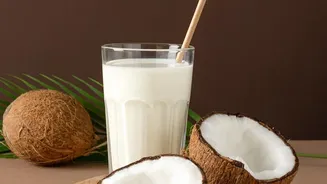







The Hydration Showdown
For generations, coconut water and buttermilk (or chaas) have been India's default thirst-quenchers. One is a slightly sweet, clear liquid from nature's own packaging; the other is a tangy, creamy derivative of milk, often spiced to perfection. While
both are celebrated for their cooling properties, their nutritional strengths serve different needs. Coconut water is often hailed as a natural sports drink, while buttermilk is revered for its digestive benefits. Understanding their unique profiles is key to choosing the right one for your daily routine.
Coconut Water: Nature’s Electrolyte Drink
Coconut water's claim to fame lies in its impressive electrolyte content, especially potassium. A single cup can contain more potassium than a banana, a mineral crucial for regulating fluid balance, muscle contractions, and blood pressure. This makes it an excellent choice for rehydrating after a light workout or a day out in the sun, helping to replenish what's lost through sweat. It's naturally low in calories and sugar, making it a healthier alternative to many packaged sports drinks. However, it is relatively low in sodium, the main electrolyte lost during intense, prolonged exercise, so it might not be sufficient for serious athletes on its own.
Buttermilk: The Probiotic Cooler
Buttermilk, or chaas, is a fermentation marvel. Its primary strength is its rich probiotic content. These live, beneficial bacteria are champions of gut health, aiding digestion, improving nutrient absorption, and supporting a robust immune system. Often consumed after meals, buttermilk helps soothe the stomach, prevent bloating, and can even alleviate acidity. It's also a great source of calcium for bone health and contains B vitamins. While it contains electrolytes like potassium, its real superpower is in promoting digestive wellness. Traditional buttermilk made at home is low in fat and calories, though commercially prepared versions can vary.
The Nutritional Verdict
When placed side-by-side, the choice becomes situational. For rapid rehydration and an electrolyte boost (especially potassium), coconut water has the edge. It’s lighter and absorbs quickly. For digestive health, buttermilk is the undisputed winner. Its probiotics offer benefits that go far beyond simple hydration, helping to balance your gut microbiome. Calorie-wise, unsweetened coconut water is generally lower than buttermilk, but both are light options compared to sugary sodas. Buttermilk offers more protein and significantly more calcium, whereas coconut water provides some Vitamin C.
Why This Choice Is Significant
The growing popularity of both coconut water and buttermilk points to a significant cultural and wellness shift across India. Consumers are increasingly turning away from sugary, carbonated soft drinks and towards natural, traditional alternatives. This development is not just about choosing a healthier drink; it's a conscious return to roots. It reflects a growing awareness of the benefits of whole foods and traditional Indian food wisdom. This trend supports local economies, reduces reliance on processed goods, and reconnects a new generation with the time-tested health practices of their heritage. The rise of these humble drinks signifies a broader movement towards mindful consumption and holistic well-being.
Which One Is Right for You?
The best choice really depends on the moment and your body's needs. Need to rehydrate quickly after a run or a hot afternoon? Grab a glass of coconut water. Looking for a digestive aid after a heavy lunch or something to cool your system from within? Spiced buttermilk is your ideal companion. Many find that alternating between the two offers a balanced approach to daily hydration and wellness. The ultimate winner isn't one drink over the other, but rather the informed consumer who understands how to use these natural powerhouses to their advantage.