






First, What Are Ultra-Processed Foods?
Before diving into the science, let's clarify the term 'ultra-processed food,' or UPF. These aren't just foods in a package. UPFs are industrial formulations, typically containing ingredients you wouldn't find in a home kitchen, like preservatives, emulsifiers,
and artificial colours and flavours. They are designed for convenience and a long shelf life. Common examples include packaged snacks, sugary drinks, instant noodles, processed meats, and many ready-to-eat meals. These foods now make up a significant portion of diets in many countries, including India, where their consumption is rising rapidly. This prevalence is why scientists are so keen to understand their health impact.
What the Research Found
Recent large-scale analyses have consistently found a link between high UPF consumption and negative health outcomes. A major review pooling data from over 8.8 million people found that those who ate more UPFs had a higher likelihood of experiencing cardiovascular events, cancer, type 2 diabetes, obesity, and even anxiety and depression. One analysis noted that for every additional 100-gram serving of UPFs per day—roughly the size of a small bag of chips or two hot dogs—the associated risk of cardiovascular events rose by 14%. On the surface, these numbers seem terrifying. But this is where the crucial detail from the headline comes into play: these studies are observational.
The Golden Rule: Correlation Is Not Causation
This is the most critical concept to grasp when reading health news. An observational study watches a group of people over time, tracking their habits (like diet) and their health outcomes. It can identify patterns or associations—for instance, people who eat more UPFs tend to have more heart disease. This is a correlation. What it cannot do is prove that the UPFs caused the heart disease. Think of it this way: sales of ice cream and the number of shark attacks are both highest in the summer. They are correlated, but eating ice cream does not cause shark attacks. A third factor, the hot weather, drives both. This 'third factor' is what scientists call a confounding variable.
Unpacking the 'Confounding Variables'
In nutrition research, confounding variables are everywhere. A person who eats a lot of UPFs might also have other habits that increase disease risk. They might exercise less, smoke, have a lower income, or have less access to fresh, healthy food. Researchers try their best to statistically adjust for these factors, but it's nearly impossible to account for everything. This is a key limitation of observational research. It's difficult to isolate the effect of one specific dietary component when it's part of a larger lifestyle pattern. So, while the link between UPFs and poor health is strong and consistent across studies, these studies can't definitively say the food itself is the sole culprit.
So, Should We Ignore the Warnings?
Not at all. While one observational study isn't definitive proof, the sheer volume of research pointing in the same direction is a major red flag. Dozens of studies involving millions of people have found the same general pattern. Scientists believe several mechanisms could explain a potential causal link. UPFs are often low in fiber and essential nutrients but high in sugar, unhealthy fats, and salt. They can also contain a "cocktail effect" of additives that may disrupt the gut microbiome and promote inflammation. Some controlled trials—where researchers have direct control over diets—have shown that people tend to eat more calories and gain weight on UPF-heavy diets, even when the alternative has the same amount of fat, sugar, and carbs.
A Smart, Practical Takeaway
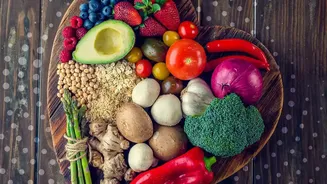
The key isn't to live in fear of every packaged food. The real message is one of moderation and mindfulness. You don't need to ban every biscuit or chip from your home. Instead, the evidence strongly supports a diet based primarily on whole or minimally processed foods: vegetables, fruits, dals, whole grains, nuts, and seeds. Think of it as a shift in balance. Read labels to be aware of long lists of unfamiliar ingredients. The goal is not perfection, but progress. Making an effort to cook more meals at home and treating UPFs as occasional items rather than daily staples is a practical and powerful step toward better health, grounded in a sensible understanding of the science.