




Kolkata is often called the 'London of India', a label that speaks volumes about its past. But where did this nickname come from, and how do the city's grand old buildings define this colonial identity even today?
The Second City of an Empire
To understand the nickname, one must travel
back to when Kolkata, then called Calcutta, was the epicentre of British power in Asia. From 1772 until 1911, it served as the capital of British India, a bustling port and administrative hub that grew to become the second most important city in the British Empire after London itself. The British sought to build a capital that reflected their imperial might, commissioning architects and engineers to construct grand buildings, manicured parks, and wide promenades modeled after European capitals. This deliberate effort to engineer a tropical replica of London, complete with Gothic, Neoclassical, and Baroque architecture, cemented the comparison.
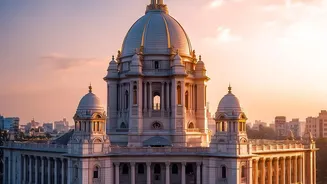
Victoria Memorial: The 'Taj of the Raj'
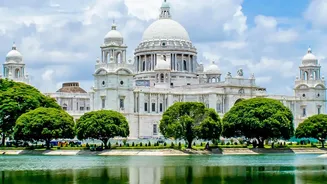
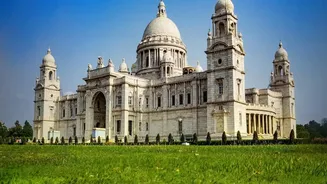
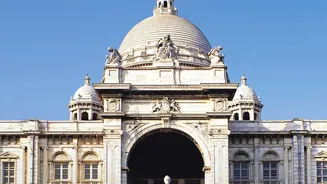
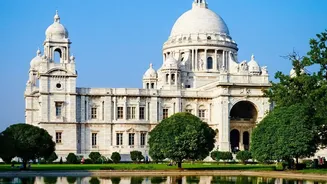
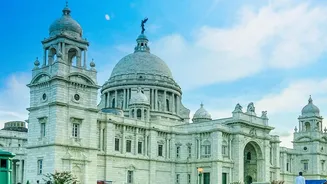
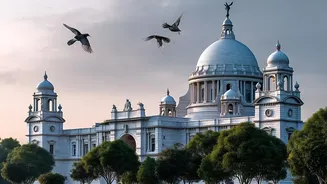
Perhaps no structure embodies this legacy more than the Victoria Memorial. Conceived by Lord Curzon after the queen's death and completed in 1921, this magnificent white marble monument is a masterpiece of the Indo-Saracenic style, blending British and Mughal architectural elements. Designed by Sir William Emerson, its grand dome, high portals, and sprawling gardens were intended to rival the Taj Mahal, earning it the nickname 'Taj of the Raj'. Made from the same Makrana marble as the Agra marvel, the memorial was built to symbolize the might and permanence of the British Raj, solidifying Kolkata's image as a city of imperial grandeur.
The Writers' Building: A Seat of Power
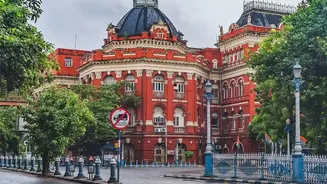
The imposing red facade of the Writers' Building tells another chapter of the city's colonial story. Originally built in 1777 by Thomas Lyon to house the junior clerks, or 'writers', of the East India Company, it evolved into the administrative nerve centre of British Bengal. Its Greco-Roman and Neoclassical design, with its long frontage and Corinthian columns, projected an image of authority and order. For over two centuries, this building was the seat of British power, witnessing key moments in Indian history, including the fight for independence. Today, it remains a powerful symbol of governance and colonial architecture.
Gothic Spires in a Tropical Setting
The architectural parallels to London are strikingly evident in the city's religious structures. St. Paul's Cathedral, completed in 1847, was the first Anglican cathedral in Asia and a landmark of Indo-Gothic design. It was explicitly built to serve the growing European community and was inspired by English cathedrals like Norwich and Canterbury. Its soaring spire (since rebuilt after earthquakes), pointed arches, and stained-glass windows were a direct import of British ecclesiastic style, adapted for the Indian climate. This transfer of architectural DNA contributed significantly to the feeling that one was walking through a slice of London on the banks of the Hooghly.
A Complicated Legacy
While the 'London of India' and 'City of Palaces' monikers highlight an undeniable architectural splendor, they also represent a complicated history. These buildings are both a source of pride for their beauty and a reminder of a colonial past. Modern Kolkata is a vibrant, bustling metropolis that has forged its own unique cultural identity, famously earning it the title 'City of Joy'. The colonial landmarks are now part of a rich, layered heritage, drawing tourists and history buffs alike. They stand not just as relics of an empire, but as enduring testaments to the city's complex and fascinating journey through time.