







The Puzzle of the Train Food App
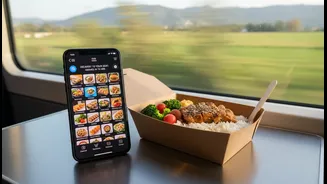
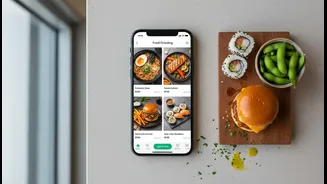
Ordering food on a train in India has transformed from waving down platform vendors to a few taps on an app. Services like IRCTC’s ‘Food on Track’ and other aggregators allow you to enter your PNR number, see a list of restaurants at upcoming stations,
and get food delivered to your seat. Yet, the experience can be puzzling. Why can you only order from certain stations? Why are some of your favourite local restaurants not listed, even if they are right next to the station? And why is there a cut-off time for placing an order? These aren't app glitches or arbitrary rules; they are the direct result of the enormous logistical challenge of serving safe, hot food to millions of passengers on a moving target.
The Journey of Your Meal
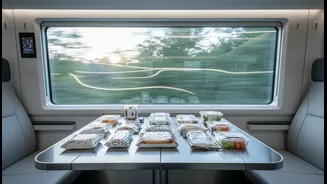
Unlike a regular food delivery where the food travels from a fixed restaurant to a fixed address, your train meal is part of a complex supply chain. When you place an order, it’s sent to a restaurant in a city your train might be hours away from. The restaurant, which must be a licensed partner, has to prepare, pack, and get the meal to the station. A delivery person then has to navigate the platform, find your specific train and coach—which will only be there for a few minutes—and hand it over to you. This entire process is a race against time, complicated by potential train delays and the chaos of a busy Indian railway station. The limited station options and ordering windows you see on the app are designed to make this fragile delivery chain possible.
FSSAI Rules on the Rails
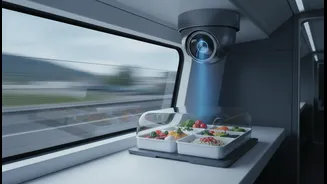
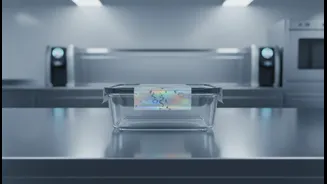
The most significant factor shaping your app menu is food safety. The Food Safety and Standards Authority of India (FSSAI) has specific regulations for railway catering to ensure passenger health. Every vendor, from a small stall to a large base kitchen supplying trains, must have an FSSAI license. These regulations govern everything: the quality of raw materials, hygiene in the kitchen, proper cooking temperatures, and packaging standards. IRCTC has further implemented measures like CCTV monitoring in base kitchens, third-party audits, and deploying food safety supervisors to ensure compliance. The QR codes now being printed on food packets allow for traceability back to the kitchen, adding another layer of accountability.
How Safety and Logistics Shape Your App Choices
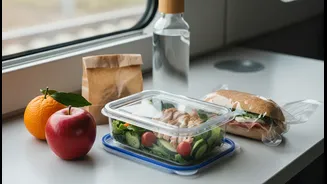
So, how does this connect to your app? The restaurants you see listed are not just any restaurants; they are FSSAI-approved partners who have been vetted and integrated into the railway's e-catering system. They have agreed to follow the stringent preparation, packaging, and delivery protocols required. The seemingly limited menu is often a curated list of items that can be prepared safely, packaged to retain heat and prevent spillage, and still taste good after the journey from kitchen to platform to your seat. Highly perishable items or complex dishes that can't withstand the transit process are often excluded. The rigid cut-off times ensure the restaurant has enough lead time to prepare the food hygienically without rushing and to coordinate the delivery with the train's estimated arrival. It’s a system built on safety and predictability, not just variety.
Smarter Ordering, Safer Eating
Understanding this background can help you have a better dining experience on your next journey. Instead of getting frustrated by the limitations, you can use the system to your advantage. Order well in advance, preferably from a station that is a major junction, as they tend to have more and better-reviewed options. Look for restaurants with high ratings within the app, as this often reflects their reliability and food quality. If traveling in a group, use the group order function, which can simplify logistics for the vendor. And when your food arrives, check for the proper packaging and, if available, the QR code. By understanding that the app's framework is built around safety, you can navigate it more effectively and enjoy a hot, hygienic, and hassle-free meal on your travels.