

Rava Kesari: The Golden Sheen of the South
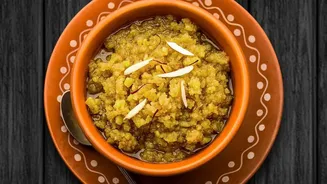
Known for its vibrant orange-yellow hue, Rava Kesari is a beloved sweet from South India, particularly popular in Karnataka and Tamil Nadu. Its name itself gives a clue to its identity: 'Rava' means semolina, and 'Kesari' refers to saffron, the spice
that imparts its signature colour and a delicate aroma. This dessert, also called Kesari Bath, is essentially a sweet pudding made by roasting fine semolina in ghee, then cooking it with sugar and water or milk. The final dish is soft, with a melt-in-the-mouth texture, often studded with ghee-fried cashews and raisins. Its simplicity and quick preparation time, often under 30 minutes, make it a household favourite. Rava Kesari is a fixture at festivals, family celebrations, and is frequently offered as 'prasadam' in temples, representing prosperity and auspiciousness. It's also a common component of a South Indian breakfast 'thali', served alongside savoury items.
Mishti Doi: Bengal's Creamy, Cultured Legacy
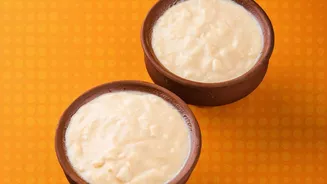
Travel east to Bengal, and you’ll find Mishti Doi, a dessert that holds a legendary status. Translating to 'sweet curd', it is far more than just sweetened yogurt. The magic of Mishti Doi lies in its unique preparation. Full-fat milk is slowly boiled and reduced until it thickens, concentrating its richness. Separately, sugar or traditional palm jaggery (nolen gur) is caramelized to a deep amber colour. This caramel is then stirred into the warm, reduced milk, which is then cultured with a small amount of yogurt starter. The mixture is traditionally poured into unglazed earthen pots, or 'matkas'. These porous pots play a crucial role, wicking away excess moisture and helping the doi to set into a thick, firm, and creamy consistency. The result is a silky, sweet, and slightly tangy dessert with a distinctive caramel flavour and a beautiful reddish-brown hue. A staple at the end of a Bengali meal, Mishti Doi is a symbol of celebration and hospitality.
Puran Poli: Maharashtra’s Festive Flatbread
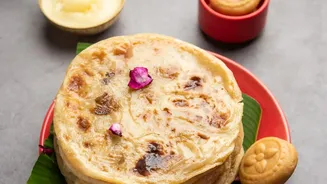
From the western state of Maharashtra comes Puran Poli, a dish that beautifully blurs the line between a main course and a dessert. Unlike the pudding-like Kesari or the creamy Mishti Doi, Puran Poli is a soft, sweet flatbread. The 'Puran' is a fragrant, sweet filling made by cooking chana dal (split Bengal gram) with jaggery until it forms a smooth, thick paste. This paste is delicately spiced with cardamom and nutmeg. The 'Poli' is a thin outer covering made from whole wheat flour, sometimes mixed with refined flour. A small portion of the puran is stuffed into the dough, which is then carefully rolled out and cooked on a griddle with a generous amount of ghee until golden brown. Making it is considered an art, requiring patience and skill to ensure the filling is evenly distributed and the poli is rolled thin without tearing. Puran Poli is non-negotiable during major festivals like Ganesh Chaturthi, Holi, and Gudi Padwa, where it symbolises abundance and joy.
Three Icons, One Sweet Nation
Though they hail from different corners of India and represent diverse culinary forms—a pudding, a yogurt, and a flatbread—these three sweets share a common soul. Each transforms simple, humble ingredients like semolina, milk, or lentils into something extraordinary through time-honoured techniques. They are united by the liberal use of ghee, the fragrance of traditional spices like saffron and cardamom, and their indispensable role in marking life's most joyous occasions. Whether it’s the sunny warmth of Rava Kesari, the earthy coolness of Mishti Doi, or the comforting embrace of Puran Poli, each dish tells a story of its region's culture, history, and love for sharing happiness through food. They are a testament to India's ability to create unity in diversity, one delicious bite at a time.