



Our Crowded Skies: A Cosmic Problem
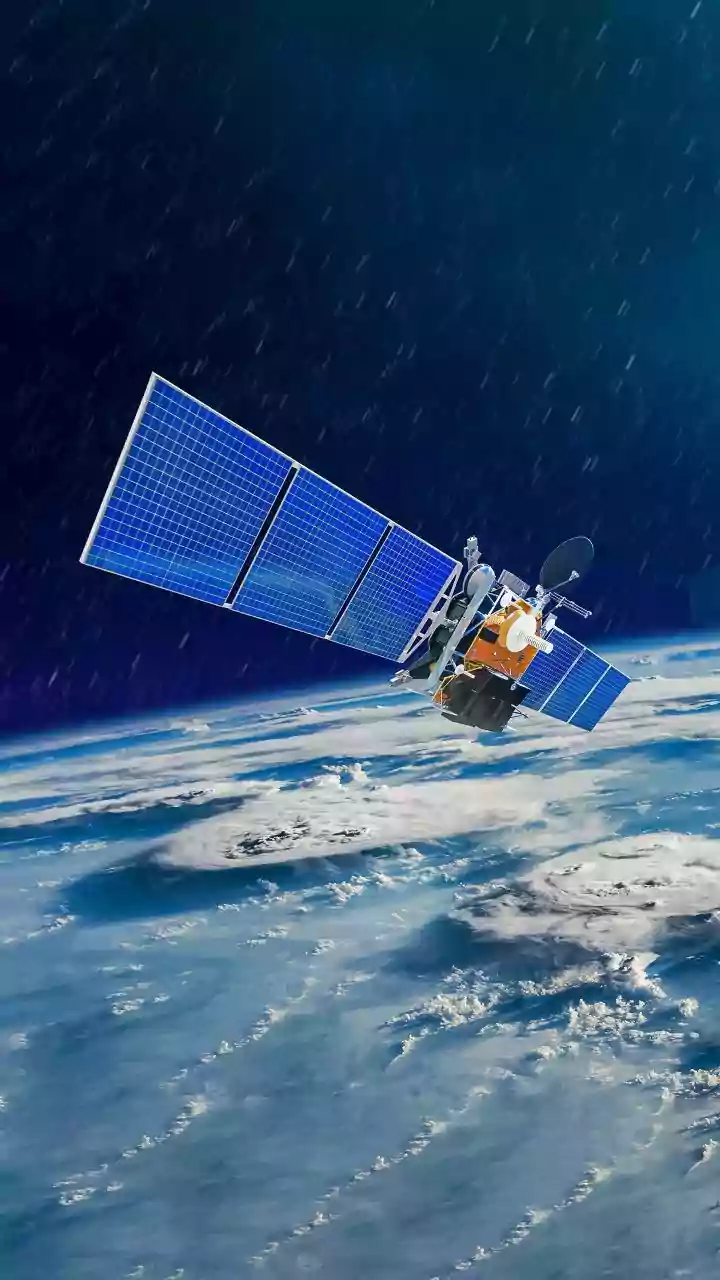
For over 60 years, humanity has been sending rockets and satellites into orbit. While this has revolutionised communication, navigation, and science, it has also left behind a trail of waste. This space debris includes everything from defunct satellites and spent
rocket stages to tiny flecks of paint and metal fragments from explosions or collisions. With hundreds of thousands of objects zipping around the planet at extreme speeds, the risk of a catastrophic chain reaction, known as the Kessler Syndrome, is a genuine concern. A single collision could create thousands of new pieces of debris, each capable of destroying an operational satellite, crippling the GPS, weather forecasting, and communication services we rely on daily. This threat has given rise to a new and essential market: space debris removal.
First, You Must See It: The Art of Tracking
You can't clean up what you can't see. The first crucial component of the debris removal market is tracking. A global network of ground-based radar and optical telescopes constantly scans the skies to monitor and catalogue objects, some as small as 10 centimetres. Organisations like the US Space Surveillance Network and the European Space Agency maintain vast databases of these objects, predicting their trajectories to warn satellite operators of potential collisions. India is also bolstering its capabilities with ISRO's Project NETRA, an early warning system designed to detect hazards to the nation's space assets. This Space Situational Awareness (SSA) is the bedrock of the industry, providing the essential data that makes any cleanup mission possible. Advanced software and AI are increasingly used to process this data, providing more accurate predictions and automated alerts.
The Cleanup Crew: Capture Technologies
Once a piece of debris is identified as a threat, the next challenge is capturing it. This is where a new generation of space-tech companies are getting creative, developing methods that sound like they're straight out of science fiction. Options currently being tested and deployed include giant nets to ensnare tumbling objects, harpoons that fire into the body of a defunct satellite, and highly precise robotic arms to grapple and secure debris. Companies like Japan's Astroscale and Switzerland's ClearSpace are pioneers in this field. Astroscale's ADRAS-J mission recently completed the first-ever commercial rendezvous and close-up inspection of a piece of debris. These technologies must be incredibly sophisticated, able to match the speed and rotation of a target to ensure a secure capture without creating more fragments.
Bringing Down the Trash: De-Orbiting Solutions
Capturing debris is only half the battle; it then needs to be safely removed from orbit. This process is called de-orbiting. The simplest method for objects in Low Earth Orbit (LEO) is to guide them into a controlled descent where they burn up harmlessly in the Earth's atmosphere. To achieve this, companies are developing several technologies. Drag sails are large, thin membranes that unfold to increase atmospheric drag, causing the satellite to slow down and fall out of orbit faster. Other concepts include tethers that interact with Earth's magnetic field and even small thrusters attached to debris to push it downwards. One innovative idea even proposes using a satellite's own lithium-ion batteries, intentionally triggering a thermal runaway to generate thrust for its final descent. For larger pieces, dedicated 'shepherd' vehicles could tow debris to its fiery end.
A Market Ready for Liftoff
The demand for these services is undeniable. With the number of satellite launches increasing exponentially, the risk of collision grows daily. As a result, the space debris removal market is projected to grow significantly, with some estimates suggesting it could reach over USD 0.6 billion by 2028 and continue to climb. Customers include private satellite constellation operators, who need to protect their multi-billion dollar investments, and government agencies. Regulatory bodies are also starting to mandate end-of-life disposal plans for new satellites, further fuelling the market. Companies like Astroscale, ClearSpace, and Northrop Grumman are major players, but a host of startups are emerging, offering everything from tracking services to full-service removal.