





The Mission At A Glance
The first uncrewed flight of the Gaganyaan programme, officially designated G1, is a pivotal mission for the Indian Space Research Organisation (ISRO). Targeted for launch before the end of 2026, this flight is designed to validate every critical system
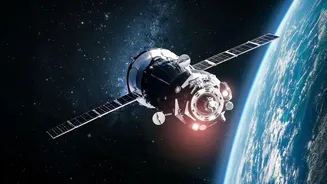
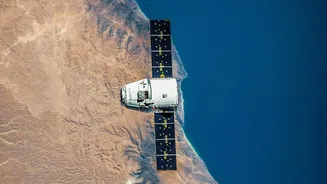
in a real-world space environment before humans are put on board. The spacecraft will be launched into a low-Earth orbit of around 400 kilometres, where it will perform a series of manoeuvres before re-entering the atmosphere and splashing down in the Indian Ocean. The entire journey is a full-scale simulation of the eventual crewed mission, but without the astronauts.
Core Objectives of the G1 Flight
The primary goal of the G1 mission is risk reduction. ISRO engineers need to see how the integrated system performs from launch to recovery. This includes testing the performance of the human-rated launch vehicle, the orbital module's propulsion systems, and the life support systems in the crew module. Key flight events like achieving orbit, on-orbit manoeuvres, the fiery re-entry through Earth's atmosphere, and the precise deployment of the parachute system for a safe splashdown will be meticulously monitored. Every piece of data gathered is crucial for ensuring the safety and reliability of the technology before Indian astronauts, or 'Vyomanauts', make the journey.
The Technology on Trial
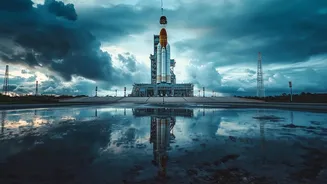
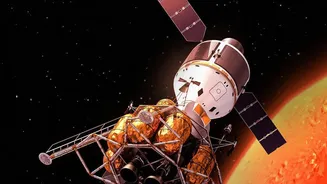
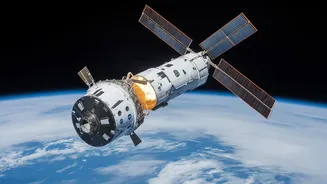
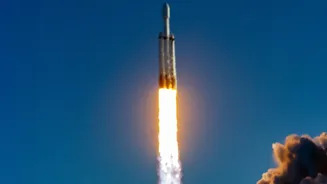
At the heart of the mission is the Human-Rated LVM3 (HLVM3) rocket, a modified version of ISRO's most powerful and reliable launcher. This rocket has been re-configured with additional redundancies and a Crew Escape System (CES). The CES is a critical safety feature designed to pull the crew module away from the rocket in case of an emergency during the launch phase. The G1 flight will also be the ultimate test for the orbital module, which consists of the Crew Module where astronauts will eventually sit, and the Service Module that houses propulsion and power systems. The Environmental Control and Life Support System (ECLSS), designed to provide an Earth-like atmosphere inside the capsule, will also be under intense scrutiny.
Meet Vyommitra, The Humanoid Stand-In
Aboard the G1 mission will be Vyommitra, a sophisticated humanoid robot developed by ISRO. The name, derived from the Sanskrit words for "space" and "friend," perfectly describes its role. Vyommitra is a half-humanoid, meaning it has a torso, head, and two arms, but no legs. It is designed to simulate human functions, operate control panels, communicate with ground control, and monitor the cabin environment. By observing how the spacecraft's systems respond to Vyommitra's presence and actions, ISRO can gather invaluable data on the conditions a human crew will experience, from vibrations and acceleration to the performance of life support systems, without any human risk.
The Path to Human Spaceflight
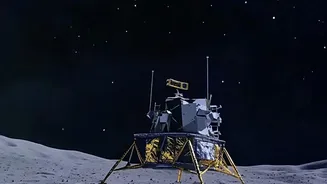
The G1 mission is not a one-off test. It is the first of at least two planned uncrewed test flights. The success of these missions is a prerequisite for the final crewed flight. Each uncrewed flight allows ISRO to test systems, gather data, and make necessary refinements. Following a successful G1 mission, a second uncrewed flight (G2) will further validate the systems, potentially carrying Vyommitra again for more advanced tests. Only after these comprehensive demonstrations will ISRO proceed with the first human spaceflight mission, which aims to carry a crew of three into orbit for a mission lasting several days. This step-by-step approach underscores the absolute priority ISRO places on crew safety.