



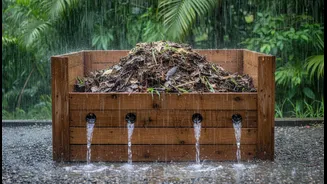


The Monsoon Composting Challenge
A healthy compost pile is a bustling city of microorganisms that need air and water to thrive. During the rainy season, the balance is easily tipped. Heavy downpours can saturate your pile, filling the essential air pockets with water. This creates an anaerobic
(oxygen-free) environment. Instead of the earthy smell of healthy decomposition, you get the foul odour of rotting, often described as smelling like ammonia or rotten eggs. This is a sign that the wrong kind of bacteria have taken over, producing a slimy, compacted sludge that is slow to break down and harmful to plants. The goal during the monsoon is to manage this excess moisture and ensure a constant supply of oxygen.
Oxygen: The Secret Ingredient
Think of your compost pile as a living organism; it needs to breathe. Aerobic microbes, the 'good guys' in composting, require oxygen to efficiently break down organic matter into nutrient-rich humus. When they have enough air, they work quickly and generate heat, which helps kill pathogens and weed seeds. Loose, aerated layers create channels and pockets within the pile, allowing oxygen to penetrate from the surface to the core. This structure prevents the contents from compacting under the weight of rainwater, ensuring that even in a downpour, your microbial workforce has the oxygen it needs to keep working effectively.
Layering for Success
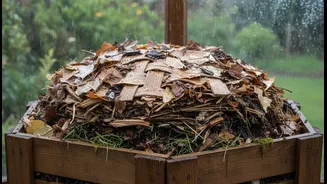
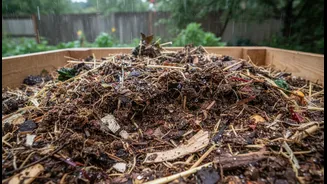
The key to building an all-weather compost pile is the 'lasagna method'—alternating layers of 'greens' and 'browns'. 'Greens' are nitrogen-rich materials like kitchen scraps, fresh grass clippings, and coffee grounds. 'Browns' are carbon-rich materials like dried leaves, shredded cardboard, and woodchips. For the rainy season, you need to be generous with your browns. A good rule of thumb is to aim for a ratio of two to three parts brown material for every one part green material. Start your pile with a thick, 6-inch layer of coarse brown material, like twigs or woodchips, to promote drainage and airflow from the bottom up. Then, continue layering your greens and browns, always finishing with a top layer of browns to discourage pests.
Your Guide to 'Brown' Materials
Not all browns are created equal, especially when fighting moisture. During the monsoon, you need materials that not only provide carbon but also create physical structure. Stockpile these before the rains begin. Dried leaves are a classic, but they can mat down when wet. Shredded cardboard and newspaper are excellent as they absorb moisture and maintain some structure. Cocopeat is another fantastic option in India for absorbing moisture and keeping the pile from compacting. The champions of aeration, however, are woody materials like small twigs, wood shavings, and sawdust (from untreated wood). These create robust air pockets that resist compaction, keeping your pile breathing even when saturated.
Keeping the Air Flowing
Besides smart layering, you can take other steps to boost aeration. While frequent turning is often recommended, it can be difficult in constant rain. If you get a dry spell, take the opportunity to turn the pile and mix the wet outer layers into the hotter, drier centre. A compost aerator tool, which looks like a large corkscrew, is a great investment. Plunging it into the pile and pulling it up creates instant air channels without the need for heavy lifting. You can also insert perforated PVC pipes or wooden stakes vertically into the pile to create permanent ventilation shafts. Finally, ensure your bin or pile has good drainage at the base so excess water can escape.
Shelter from the Storm
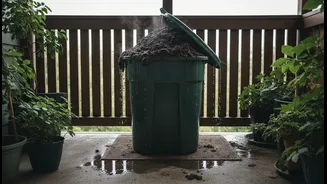
While aeration is crucial, it's also wise to limit the amount of direct rain your compost receives. An overwhelming deluge can defeat even the best-structured pile. You don't want to seal it completely, as that would cut off air. A simple, effective solution is to cover the top of your pile with a waterproof tarp or a sheet of corrugated metal, propped up to allow for airflow underneath. If you use a bin, ensure it has a lid. On less rainy or sunny days, remove the cover for a few hours to let the pile breathe and allow some surface moisture to evaporate.