


The Golden Rule: Safety Above All
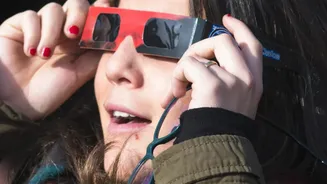
Before you even think about camera settings, understand this: never look at the sun directly through an unfiltered camera, telescope, or binoculars. Intense, focused sunlight can cause permanent eye damage in an instant and can also melt your camera's
internal components, including the sensor and shutter. The only safe way to photograph the partial phases of an eclipse is by using a certified solar filter that is specifically designed for this purpose. This filter must always be placed on the front of your lens or telescope, never at the eyepiece. Standard neutral density (ND) filters are not strong enough and will not protect your eyes or your gear.
Gearing Up: Your Essential Eclipse Kit
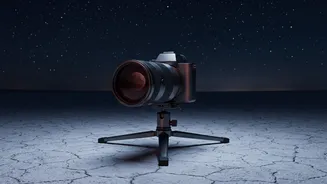
Your primary piece of equipment, aside from your camera, is a certified solar filter. These come in two main types: glass and film (often aluminized polyester). Both are effective, with glass filters being more durable and film filters often being more affordable. They are designed to block more than 99.99% of the sun's light and harmful infrared and ultraviolet radiation. You will also need a sturdy tripod. During the long partial phases and the dramatic moments of totality, your camera must remain perfectly still for sharp images. A remote shutter release or using your camera's self-timer is also highly recommended to minimize vibration when you take a picture.
Choosing Your Optics: Lens or Telescope?
To get a reasonably large image of the sun, you'll need significant focal length. A standard 50mm lens will render the sun as a tiny dot. A telephoto lens of at least 500mm is recommended for a compelling shot. Many photographers turn to 'digiscoping', which involves attaching a DSLR or even a smartphone to a telescope or spotting scope. This method can provide powerful magnification without the high cost of an exotic telephoto lens. If you use a telescope, it must also be fitted with a proper solar filter over its main aperture. Some smaller telescopes are designed specifically for solar viewing, which can be another great option.
Dialing It In: Core Camera Settings
With your solar filter attached, you can start experimenting with settings. Begin by setting your camera to manual mode. A good starting point is a low ISO (like 100 or 200) and an aperture of around f/8. Because the filtered sun is still quite bright, your shutter speed will need to be fast, likely in the range of 1/500 to 1/4000 of a second. The sun's brightness remains constant through most of the partial phases, so once you find an exposure you like, you won't need to change it much until the final sliver of sun is visible. At that point, you may need to increase your exposure slightly. Always shoot in RAW format if your camera allows, as it gives you the most flexibility for editing afterward.
Practice Makes Perfect: Rehearse Before the Day
A solar eclipse is a high-pressure, fleeting event. You do not want to be fumbling with gear and settings while the spectacle unfolds. In the weeks before the eclipse, practice on the uneclipsed sun. Attach your solar filter and take test shots to determine the best exposure settings for your specific gear. Practice locating the sun in your viewfinder, focusing sharply on its edge (the 'limb'), and reviewing your shots. This rehearsal will build muscle memory, allowing you to work efficiently and confidently on eclipse day, so you can spend less time looking at your camera and more time enjoying the view.
Shooting Through Totality
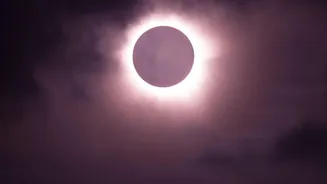
If you are fortunate enough to be in the path of totality, the rules change for a few brief, magical minutes. Just before and after totality, you can capture features like 'Baily's Beads' and the 'Diamond Ring'. The most crucial step: as soon as the last sliver of the sun's bright surface is gone, you must remove the solar filter. This is the ONLY time it is safe to do so. With the filter off, you can photograph the sun's ethereal outer atmosphere, the corona. Exposures for the corona will vary widely, so it's best to bracket your shots, taking photos at a wide range of shutter speeds from 1/1000s down to a full second or more to capture both the inner and outer corona. As soon as the sun begins to reappear, put the solar filter back on immediately.