






A Landmark Achievement Unveiled
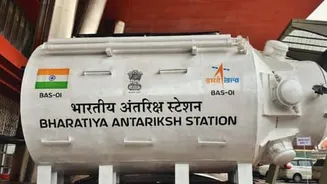
The Indian Space Research Organisation (ISRO) has hit a significant target on the path to creating its own orbital outpost. The agency has officially begun designing the critical subsystems for the Bharatiya Antariksha Station (BAS), India's first indigenous
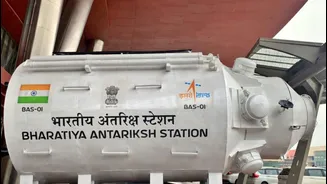
space station. This development was confirmed in Parliament, signaling a major step forward in the ambitious plan to establish a modular space station in low-Earth orbit by 2035. Specifically, the Baseline Design Review and System Engineering for the first module, known as BAS-01, have been successfully completed. This means the foundational blueprint is now locked in, allowing ISRO’s various centres to begin the detailed design and development of the complex hardware and software that will make up the station. This isn't just paperwork; it is the essential engineering phase that turns a grand vision into a tangible project.
What is the Bharatiya Antariksha Station?
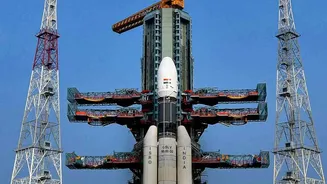
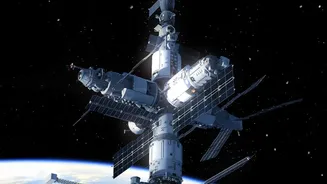
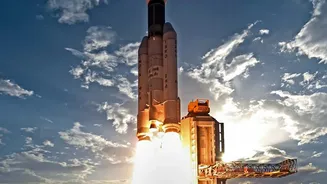
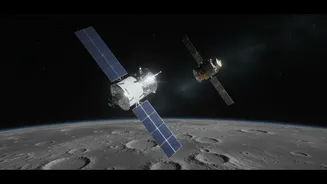
The Bharatiya Antariksha Station is envisioned as India's answer to the International Space Station, a permanent laboratory orbiting roughly 400 kilometres above Earth. The complete station is planned to consist of five distinct modules, including a base module, a core docking module, and dedicated labs for scientific research. The entire structure is expected to weigh around 52 tonnes, providing a habitable space for astronauts to conduct experiments for periods of three to six months. The primary goal of the BAS is to facilitate advanced research in microgravity, which has applications in fields like pharmaceuticals, material science, and biology. The first module, BAS-01, is targeted for launch in 2028 aboard a heavy-lift LVM3 rocket. This initial module will serve as the core building block, testing vital technologies like the indigenous Environmental Control and Life Support System (ECLSS) and the Bharat Docking System. The full station is slated for completion by 2035, launched piece by piece by India's next-generation rockets.
A Legacy of Soaring Ambitions
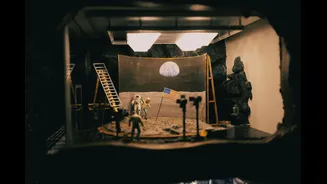
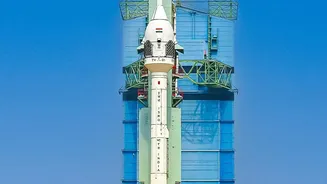
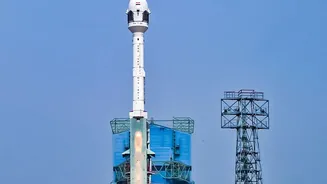
The space station programme is the logical next chapter in India's incredible space journey. It builds directly upon the foundations laid by previous landmark missions. The Chandrayaan missions proved India's capability to explore the Moon, with the historic soft landing near the south pole capturing global attention. The Mangalyaan mission made India the first nation to reach Mars on its maiden attempt, a feat of frugal engineering. Most importantly, the ongoing Gaganyaan programme is developing the core technologies for human spaceflight, which are essential for the space station. Technologies like the Human Rated Launch Vehicle (HLVM3), the crew escape system, and life support systems are all direct precursors to the BAS. By mastering human spaceflight with Gaganyaan, ISRO is developing the expertise needed not just to send astronauts into orbit, but to sustain them there for long durations.
The Challenging Road to 2035
While this milestone is a major victory, the path to an operational space station is complex. Building a self-reliant station requires mastering numerous advanced technologies. While ISRO has demonstrated its prowess in rocketry and robotics, some critical components for human spaceflight, such as astronaut flight suits and crew seats, have previously been sourced from international partners for the Gaganyaan missions. The government has now approved the indigenous development of these technologies, a crucial step towards true self-reliance ('Atmanirbhar Bharat') in space. Furthermore, long-duration missions will require new capabilities like in-space docking and even refuelling, technologies which ISRO has begun testing successfully. As ISRO works toward the 2028 launch of the first module and the 2035 completion date, it will also be focused on the broader vision, which includes sending an Indian astronaut to the Moon by 2040.