






The Core Finding: A Race Against Time
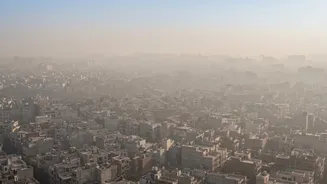
A report from the UN Environment Programme (UNEP) and the Climate and Clean Air Coalition (CCAC) puts a date on Delhi's fight for clean air. The central message is one of urgency: if Delhi meets its national air quality standards on schedule from 2026,
it can reduce the public's PM2.5 exposure burden by 20% by the year 2040. However, the report warns that an eight-year delay in implementation, which is the expected global average, would slash that achievement in half, to a mere 10% reduction. This delay would lead to significantly greater health impacts for millions of residents.
The Staggering Cost of Inaction
The report, titled 'Hidden Assets: The Economic and Health Case for Climate and Clean Air Action', frames this issue in stark economic terms. It estimates that for every US$1 invested in combined climate and clean air measures, the return could be around US$15 in economic benefits. Conversely, each year that action is postponed costs more than 0.5% of global GDP in forgone benefits, which amounts to over USD 1.5 trillion globally. These costs are not just abstract figures; they represent losses from increased healthcare burdens, lower workplace productivity, and premature deaths. In 2025, outdoor air pollution was linked to an estimated 6.4 million premature deaths worldwide.
Identifying the Roadblocks
While the sources of Delhi's pollution are well-known—ranging from vehicle emissions and industrial output to construction dust and crop burning—the UN report highlights a different kind of obstacle: institutional barriers. Globally, these administrative and political hurdles are the single largest contributor to delays in implementing clean air solutions, accounting for an average of 2.4 years of a hypothetical 15-year implementation window. The report suggests that overcoming these barriers to speed up implementation by even a decade could dramatically boost the reduction of harmful pollutants.
A 25-Point Plan for a Cleaner Future
The UN assessment doesn't just diagnose the problem; it offers a comprehensive prescription. It identifies 25 feasible solutions that tackle both air pollution and climate change simultaneously. These measures are not futuristic concepts but practical, existing technologies and policies. Key recommendations include a faster transition to renewable energy, improving energy efficiency in buildings, promoting the wider use of clean cooking and heating solutions, and enforcing stricter vehicle emission standards. Further solutions involve managing livestock and manure better, improving fertilizer use, finding alternatives to burning crop residue, and better management of solid waste and wastewater.
The Human Impact of PM2.5
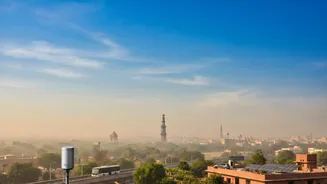
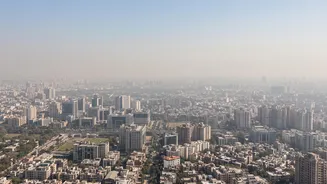
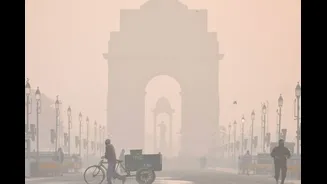
The report's focus on PM2.5—fine particulate matter that can penetrate deep into the lungs and enter the bloodstream—is critical. These particles are linked to a host of severe health problems, including strokes, heart disease, lung cancer, and chronic obstructive pulmonary diseases. Globally, air pollution is responsible for millions of deaths annually. For residents of Delhi, where PM2.5 levels can be many times higher than WHO guidelines, the threat is a daily reality. The UN report's findings confirm that reducing exposure is not just an environmental goal, but a fundamental public health imperative.