








A New Definition of Infrastructure
When governments talk about infrastructure, thoughts usually turn to roads, bridges, and power grids. Karnataka, however, is radically expanding that definition. Recent announcements reveal a strategic push to frame AI education as the foundational layer
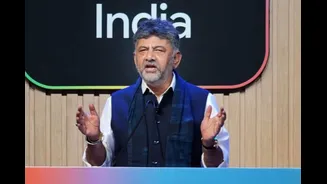
for future economic growth, akin to how physical connectivity fuelled past booms. Chief Minister D.K. Shivakumar declared the state's ambition to become 'AI-native', where AI is seamlessly integrated into governance and daily life. This isn't just about producing more coders; it's about building a deep, resilient talent pipeline that can innovate, manage, and scale AI-driven solutions across all sectors of the economy. This conceptual shift is crucial. By treating AI talent as infrastructure, the government signals a long-term commitment beyond short-term skilling programs, aiming to create a self-sustaining ecosystem.
The Blueprint: An AI University and Innovation Hubs
The cornerstone of this new infrastructure is the establishment of India's first government-driven Artificial Intelligence University. Announced in mid-July 2026 at the Google I/O Connect event in Bengaluru, the university is envisioned as a world-class institution dedicated to advanced research and talent development. It will be built on a 100-acre campus in Bengaluru, with regional campuses planned across Mysuru, Mangaluru, Hubballi-Dharwad, Belagavi, and Kalaburagi to ensure statewide impact. Complementing the university will be a dedicated AI Hub, designed to function as an incubation centre for startups, researchers, and established companies. The plan also includes embedding AI education right from the school level, ensuring that foundational skills are built early. This two-pronged approach of high-level research and widespread foundational training aims to create a comprehensive talent pool.
Fueling the Next Economic Engine
Karnataka's dominance in India's tech landscape is well-established, contributing nearly 40% of the country's software exports and hosting over 17,000 startups. However, this new strategy is about securing the next phase of growth. The government's vision extends beyond IT services to positioning the state as a global hub for AI product innovation and responsible implementation. The 'Government-First' policy, where the state becomes the initial adopter of new technologies from startups, is designed to de-risk innovation and provide a real-world testing ground. Furthermore, the plan includes setting up next-generation green data centres to provide the necessary computational backbone for a thriving AI economy. This holistic approach is designed to attract investment and solidify Karnataka's standing as a global technology leader.
From Vision to Reality: Challenges Ahead
The ambition is immense, but so are the challenges. Building a world-class university from the ground up requires attracting top-tier global faculty, developing a cutting-edge curriculum that doesn't become obsolete overnight, and forging deep, practical ties with industry. The success of this grand vision will depend on execution. Key details about the university's governance, funding, and launch timeline are still awaited. Industry bodies like Nasscom have already been collaborating with the state on Centres of Excellence and skilling initiatives, but scaling this to an entire university system is a monumental task. Ensuring that the benefits of this AI push reach beyond Bengaluru to the other proposed hubs will be critical for inclusive growth. The government's focus on using AI to improve agriculture, healthcare, and citizen services shows an awareness of this need for broad-based impact.