






After nearly 22 years of unlocking the secrets of the universe's most violent explosions, NASA's legendary Swift Observatory has come home in a blaze of glory, re-entering the atmosphere over Indonesia on November 4.
A Fiery Farewell Over Sumatra
On Wednesday morning, residents in the
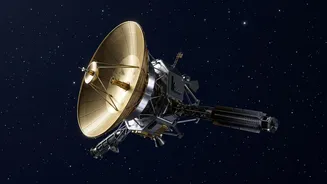
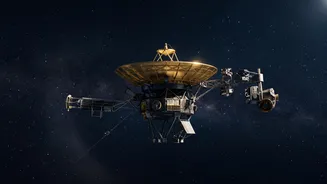
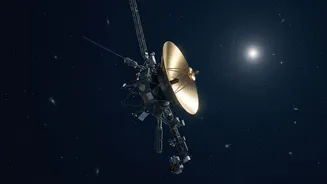
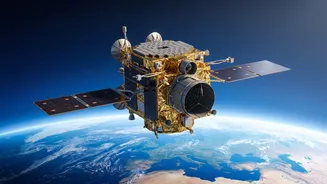
North Sumatra region of Indonesia may have witnessed the final act of a long-running space mission. The U.S. Space Force confirmed that NASA's Neil Gehrels Swift Observatory re-entered the atmosphere at approximately 7:39 a.m. EST. The 1,450-kilogram spacecraft, which had been in a decaying orbit, met its end as intense friction and heat from speeding through the upper atmosphere tore it apart. NASA expected the vast majority of the observatory to burn up completely during its descent. However, as is common with large satellites, officials acknowledged that some denser, heat-resistant components could have survived the plunge and potentially reached the surface. This was an uncontrolled re-entry, meaning its exact descent path was subject to atmospheric variables, though tracking agencies monitored its trajectory closely to the end.
What Was the Swift Observatory?
Launched in November 2004, Swift was a game-changing space telescope designed for a two-year mission that it ultimately exceeded by two decades. Its primary purpose was to study gamma-ray bursts (GRBs), the most powerful explosions in the cosmos, which can signal the birth of a black hole or the collision of neutron stars. What made Swift unique was its speed—hence the name. It carried three telescopes that worked in concert. The Burst Alert Telescope (BAT) would first detect a new GRB, and within 90 seconds, the entire satellite could pivot to point its more focused X-ray (XRT) and Ultraviolet/Optical (UVOT) telescopes at the event to study its fading afterglow. This rapid response allowed scientists worldwide to get unprecedented data on these fleeting phenomena, contributing to over 7,000 research papers.
An End Foretold by Orbital Decay
Satellites in low-Earth orbit don't stay up forever. Even at high altitudes, there are traces of atmosphere that create a tiny amount of drag. Over many years, this drag slowly saps a satellite's speed, causing its orbit to lower. For Swift, this process was accelerated by increased solar activity, which caused Earth's upper atmosphere to expand. An ambitious private mission to attach a robotic tug and boost Swift into a higher orbit was attempted earlier this year but was ultimately unsuccessful, sealing the observatory's fate. NASA officially ended Swift's science operations in late October as its altitude became too low to function steadily, allowing it to fall back to Earth. This uncontrolled re-entry is a common end-of-life scenario for older satellites that lack the fuel or systems for a guided descent into a remote ocean location.
The Growing Problem of Space Debris
Swift's return highlights a critical issue for modern space exploration: what comes up must eventually come down. While the risk to any single person on the ground from falling debris is incredibly low—NASA put the odds of harm from Swift at 1 in 2,100—the sheer number of satellites in orbit is growing exponentially. International guidelines encourage operators to dispose of satellites safely, with many newer satellites designed to 'demise' or completely burn up on re_entry. However, tens of thousands of objects remain in orbit, and hundreds of uncontrolled re_entries occur each year. This creates a 'tragedy of the commons' scenario, where the orbital environment becomes increasingly cluttered and hazardous. Furthermore, scientists are now beginning to study the long_term atmospheric effects of so many satellites vaporizing and depositing metallic aerosols into the upper atmosphere, a new frontier of environmental research.