







The Anatomy of Kriti's Core Challenge
In a video shared by her fitness coach, Kriti Sanon is seen performing what experts call an advanced hanging flutter-kick variation. While hanging from an overhead bar, she rapidly kicks a stability ball held in front of her. This movement requires a combination
of several physical attributes working in unison: immense core strength to prevent the body from swinging, powerful grip strength to support her entire body weight, and significant shoulder stability and coordination. The exercise primarily targets the core, but also heavily engages the hip flexors, shoulders, and back. The stability ball isn't just for show; it adds a dynamic targeting and coordination challenge, forcing the body to maintain control while the limbs move quickly.
Why This Isn't Your Average Ab Workout
This is far from a simple crunch or plank. Hanging exercises are considered advanced because they demand that you lift and control your own body weight against gravity. Without a strong foundation, the risk of injury is high. Attempting such a move without adequate preparation can lead to excessive swinging, placing unnecessary stress on the shoulder joints and lower back. Experts note that the true benefit of this exercise comes from maintaining trunk and pelvic control, not just kicking the ball as fast as possible. Momentum can easily take over if core engagement fails, which reduces the effectiveness of the workout and increases the likelihood of strain. This is a move that requires mastery of fundamentals before it can be performed safely and effectively.
Your Path to the Hanging Core Challenge: A Scaling Guide
Inspired to build up to Kriti's level? The key is progressive overload. Don't jump straight to the hanging bar. Instead, build your strength from the ground up with a smart, phased approach. Start with floor-based core exercises like planks, glute bridges, and leg raises. A great intermediate step is the stability ball V-pass, where you lie on your back and pass the ball between your hands and feet, which builds core control and coordination. Once you're comfortable there, you can move to the bar. Begin with dead hangs to develop grip strength. From there, progress to hanging pelvic tilts and basic hanging knee raises, focusing on controlling the movement and avoiding any swinging. Only after mastering these should you attempt straight-leg raises, and finally, the flutter-kick variation.
Safer Stability Ball Exercises for Your Home Routine
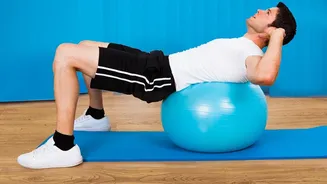
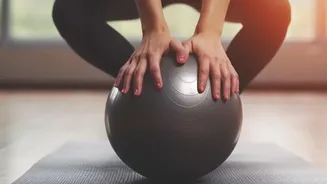
Even if the hanging challenge is a long-term goal, a stability ball is a fantastic and versatile tool for home fitness. You can use it to enhance your core workouts in less demanding but still highly effective ways. Try performing planks with your forearms on the ball to challenge your stability, a move sometimes called "stir-the-pot". You can also do crunches on the ball, which can expand your range of motion compared to floor crunches. Another excellent option is placing your feet on the ball in a push-up position; this engages your core intensely as you work to maintain balance. These exercises provide many of the same benefits—improved balance, core strength, and muscle tone—without the high risks associated with advanced hanging movements.