

A Manhattan-Sized Ice Island Is Born
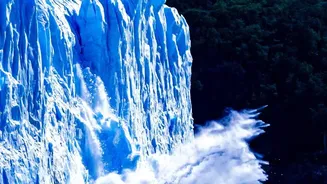
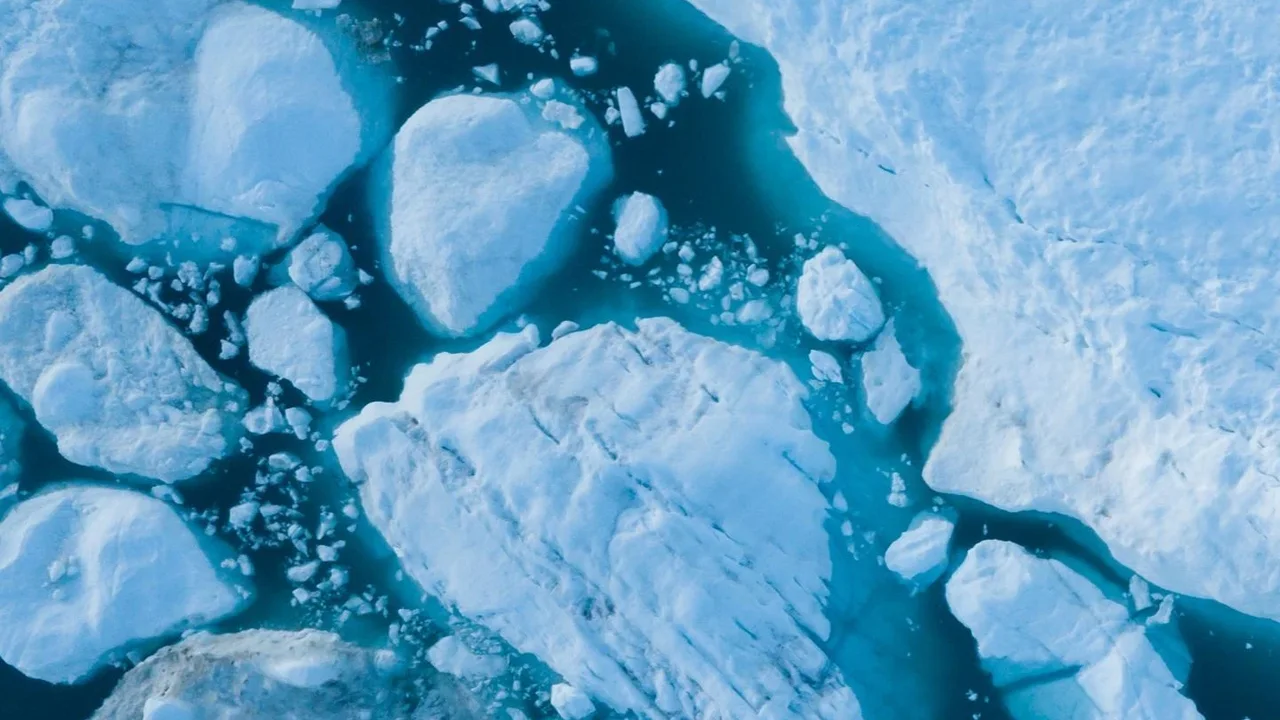
On August 4, 2026, satellite radar captured the moment a colossal piece of ice detached from the floating tongue of the Petermann Glacier. Scientists had been monitoring growing fractures for years, but the final break was swift. The newly formed iceberg,
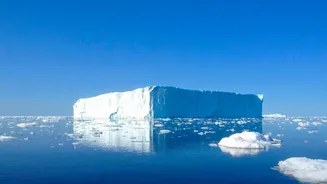
often called an 'ice island' due to its flat, tabular shape, measures approximately 76 square kilometres—an area comparable to Manhattan Island. Estimated to be up to 150 metres thick, this event is not only the largest loss of ice for Petermann in 14 years but also the most significant calving event in the entire Arctic since 2020. The European Space Agency's Sentinel-1 mission, which can see through clouds and darkness, provided the critical imagery that confirmed the break.
Why Petermann Glacier Matters
Petermann is one of Greenland's largest and most significant glaciers. It acts as a crucial channel, draining about 4% of the vast Greenland Ice Sheet into the Arctic Ocean. A key feature is its long, floating ice tongue, which extends from the main, grounded part of the glacier out over the ocean. This tongue acts like a cork in a bottle, providing a buttressing effect that helps regulate how fast ice from the interior flows towards the sea. When large pieces of this tongue break off, it can weaken this natural brake, potentially accelerating the flow of grounded ice into the ocean—a process with direct consequences for global sea levels. Scientists have been watching Petermann closely due to its history of dramatic retreats, including major calving events in 2010 and 2012.
A History of Cracks and Retreat
This latest event was not entirely a surprise. An international team of researchers had been tracking the glacier's health since 2019, documenting the gradual expansion of rifts and other signs of instability. While the glacier had been relatively stable since the last major break in 2012, this new calving signals a renewed period of significant change. The 2010 event saw an even larger piece, around 250 square kilometres, break away. These periodic, large-scale losses highlight the glacier's sensitivity to changing conditions. Scientists warn that this is unlikely to be the end of the story; two other large sections, with developing rifts, are expected to break off in the near future, which could cumulatively shrink the ice tongue by over 250 square kilometres.
The Link to Sea-Level Rise
It is a common misconception that a calving event like this immediately raises global sea levels. Because the ice tongue is already floating, its breakage is like an ice cube already in a glass of water melting—it doesn’t directly change the water level. However, the indirect consequences are far more significant. The loss of the ice tongue reduces its ability to hold back the land-based glacier behind it. Studies suggest that once calving gets closer to the 'grounding line'—the point where the glacier loses contact with the bedrock and starts to float—the acceleration of ice flow can increase substantially. This faster flow transports more ice from the Greenland Ice Sheet into the ocean, and it is this new addition of ice that contributes directly to rising sea levels. The Greenland Ice Sheet holds enough frozen water to raise global sea levels by over 7 metres if it were to melt entirely.
A Telling Sign for a Warming World
While calving is a natural process for glaciers, the increasing frequency and scale of these events are closely linked to warming air and ocean temperatures. Warm ocean water is a primary culprit, melting the underside of floating ice tongues and weakening them from below. At the same time, warmer air temperatures create melt ponds and streams on the surface, which can pour down through cracks and help to fracture the ice. The August 4 event at Petermann is more than just a remote occurrence in the Arctic; it is a clear and visible data point in the larger trend of global climate change. It underscores that what happens in the polar regions has repercussions for coastal communities around the world, including along India's extensive coastline.