



More Than Just Abs
When we think of core training, the image of a 'six-pack' often comes to mind. While exercises like crunches have their place, they primarily target the muscles on the front of your body. The side plank, however, is a comprehensive core stability exercise that
strengthens the entire lateral chain of muscles running along your sides. This includes your obliques, the deep spinal stabilizer called the quadratus lumborum (QL), and key hip muscles. This makes it a powerhouse for building the kind of 360-degree strength that supports nearly every move you make, from carrying groceries to running and changing direction. It builds a resilient, integrated core, not just isolated abdominal muscles.
The Neutral Spine Imperative
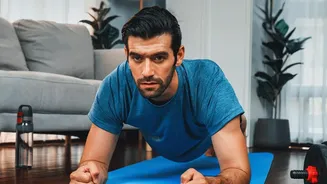
The single most important aspect of a side plank is maintaining a neutral spine. This refers to the natural, gentle curves of your neck, upper back, and lower back, which is the spine's strongest and most stable alignment. When performing a side plank, your body should form a perfectly straight line from your head to your heels. Common mistakes include letting the head drop, arching the lower back, or allowing the torso to rotate forward. These errors don't just reduce the exercise's effectiveness; they can put undue stress on the spinal joints and lead to injury. Holding a neutral position trains your core to resist unwanted flexion, extension, and rotation, which is crucial for protecting your back during daily life and athletic activities.
Why Hip Control Is a Game-Changer
Next to maintaining a neutral spine, controlling your hips is paramount. The most frequent error in the side plank is allowing the hips to sag toward the floor. This is a tell-tale sign of weakness in the hip abductors, particularly the gluteus medius. This muscle, located on the outer side of your hip, is vital for pelvic stability. When you hold a proper side plank, you are actively training the gluteus medius to fire and prevent your pelvis from dropping. Strong hip stabilizers are essential for powerful and safe movement in activities like walking and running, helping to prevent pain in the knees, hips, and lower back. If your hips sag, you are not only failing to strengthen these critical muscles but also putting your lower back in a compromised position as it tries to overcompensate.
The Unsung Heroes: Your Obliques and QL
The side plank is unparalleled for targeting the obliques and the quadratus lumborum (QL). Your obliques run along the sides of your waist and are responsible for rotating your torso and resisting rotation, which is key for stability. The QL is a deep muscle in your lower back that connects the top of your pelvis to its lowest rib and lumbar spine. It’s a major player in stabilizing the spine from side to side. A strong QL helps prevent back injuries by providing a solid base of support. When you perform a side plank, these muscles work isometrically—meaning they contract without changing length—to hold your torso and hips perfectly still and aligned, building incredible endurance and stability.
When Are You Ready to Progress?
Before considering harder variations, you must master the standard side plank. The goal is quality over quantity. You are ready to move on when you can hold a perfect side plank for 30 to 60 seconds without any form breakdown. This means your body remains in a dead-straight line, your hips do not sag or rotate, your supporting shoulder is stable (not sinking), and your head is aligned with your spine. You should feel the work primarily in your lateral core and glutes, not your lower back or neck. If you can achieve this consistently on both sides, your body has the foundational stability needed to safely tackle more dynamic challenges like side plank dips, rotations, or leg raises.