





The Old Rule: A Starting Point, Not an Endpoint
For years, the standard advice for protein has been a simple formula. In India, the Indian Council of Medical Research (ICMR) recommends 0.83 grams of protein per kilogram of body weight for the average adult. This number, known as the Recommended Dietary
Allowance (RDA), was designed to prevent protein deficiency in a generally healthy, sedentary person. However, recent scientific reviews argue that this baseline is just that—a minimum for preventing malnutrition, not a target for optimising health, strength, or body composition. The latest understanding treats this number as a floor, not a ceiling, acknowledging that many of us need more depending on our daily lives.
For the Sedentary Professional
If your days are spent mostly at a desk, your protein needs might seem low. While you don't require the high amounts an athlete does, aiming for more than the bare minimum has clear benefits. Research suggests a more optimal target for sedentary adults is around 1.0 to 1.2 grams per kilogram of body weight. This increased intake can help with satiety, making you feel fuller for longer and potentially aiding in weight management. Even with minimal activity, adequate protein is crucial for preserving the muscle mass you have, which naturally declines with age. One recent review noted that while most people are relatively sedentary, they are likely consuming more protein than they need, which could have negative health consequences, but this refers to very high intakes from supplements rather than balanced meals.
For the Active Gym-Goer
If you consistently engage in exercise, whether it’s lifting weights, running, or playing a sport, your body’s demand for protein increases significantly. Physical activity creates micro-tears in your muscles, and protein provides the essential amino acids needed to repair that damage and build stronger muscle fibres. For active adults, studies recommend an intake ranging from 1.2 to 1.7 grams per kilogram of body weight. Strength athletes might even aim for as high as 2.2 g/kg. This isn't just about building bigger muscles; it's about enhancing recovery, supporting performance, and ensuring your body has the resources to adapt to the stress of exercise.
For Healthy Ageing and Older Adults
One of the most significant shifts in protein guidance concerns older adults. After the age of 50, we naturally begin to lose muscle mass and strength, a condition called sarcopenia. This can increase the risk of falls, frailty, and loss of independence. To counteract this, a large body of recent research and expert consensus recommends a higher protein intake for those over 65. Healthy older adults should aim for 1.0 to 1.2 grams per kilogram of body weight daily. For those with chronic illnesses or who are already experiencing muscle loss, the recommendation is even higher, at 1.2 to 1.5 g/kg. Combining this higher protein intake with resistance exercise provides a powerful strategy for maintaining strength and vitality.
Beyond the Grams: Quality and Timing Matter
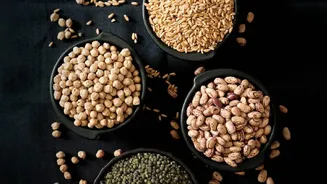
The new nuance isn't just about how much protein you eat, but also how you eat it. Spreading your protein intake evenly throughout the day appears more effective for muscle health than consuming most of it in one large meal. Many experts recommend aiming for 20 to 30 grams of protein per meal to effectively stimulate muscle protein synthesis. The source matters, too. While traditional Indian diets rely heavily on plant-based proteins, it's important to combine sources like dals, legumes, and grains to ensure you get all the essential amino acids. The ICMR's guidelines account for the lower digestibility of some plant proteins.