





A Landmark Achievement
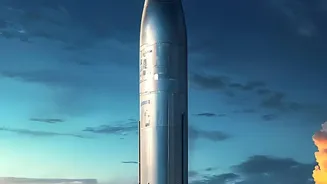
On November 14, 2026, SpaceX accomplished a feat many considered a distant dream: successfully catching the Starship upper stage after it returned from orbit. The mission, known as Flight 15, saw the massive spacecraft complete 14 orbits over 22 hours
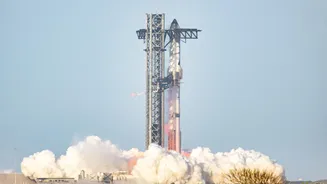
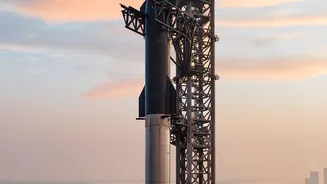
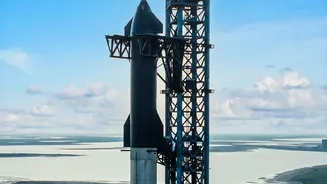
before descending through the atmosphere to be caught by the giant 'chopstick' arms of the launch tower at its Starbase facility in Texas. This was the first time in history that an orbital-class upper stage returned to its launch site for a soft landing and recovery. While the mission's other goal—catching the Super Heavy booster—was aborted due to the booster being low on fuel, the successful recovery of the ship itself was hailed as a monumental step forward. As one SpaceX commentator put it, the successful ship catch was 'the holy grail of spaceflight' and a moment where 'everything changes'.
Introducing the 'Chopsticks'
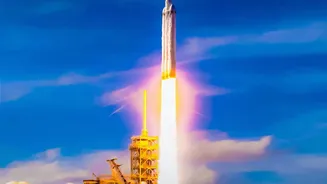
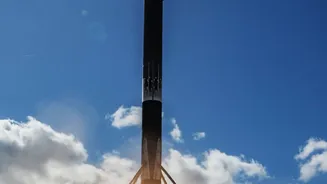
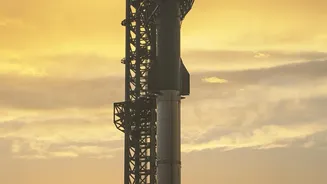
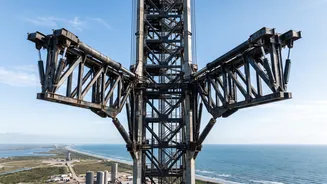
The technology at the heart of this ambition is the launch tower itself, nicknamed 'Mechazilla'. Standing approximately 480 feet tall, this steel structure does more than just support the rocket before launch; it is an active participant in the recovery. The key components are two massive arms, widely known as the 'chopsticks', which can move up and down the tower. For a catch, the returning rocket—either the Super Heavy booster or the Starship spacecraft—performs a series of engine burns to slow itself down and align with the tower. In the final moments, it hovers between the open arms, which then close around reinforced hard points on the rocket, securing it without the need for landing legs. The entire sequence is autonomous, relying on advanced guidance systems on both the rocket and the tower to make real-time adjustments for a precision capture.
The Business Case for Catching
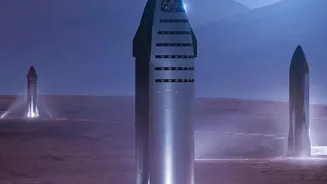
The primary driver behind this complex maneuver is the economics of spaceflight. The ultimate goal for SpaceX is to make Starship fully and rapidly reusable, much like a commercial airliner. Catching the rocket stages is crucial to this vision. By eliminating landing legs, the rocket's design is simplified, and its overall mass is reduced, which means more payload—like satellites or cargo for future Moon and Mars missions—can be carried to orbit. More importantly, a tower catch places the vehicle directly back onto its launch mount. This dramatically cuts down the time and expense needed for recovery, inspection, and refurbishment. Instead of a lengthy process of retrieving a rocket from the ocean and transporting it back, SpaceX envisions a turnaround time of days or even hours, enabling an unprecedented launch cadence.
An Unprecedented Engineering Gamble
Catching a building-sized rocket falling from the sky is an immense engineering challenge, with vanishingly small margins for error. The maneuver requires incredible precision; a miscalculation could result in the loss of both the rocket and the launch tower. The ship returns from orbit much faster and hotter than the booster, making its recovery significantly more complex. Prior to the Flight 15 attempt, SpaceX CEO Elon Musk estimated the chances of a successful first ship catch at around 50 to 60 percent, underscoring the difficulty. The system must account for numerous variables, including wind, engine performance, and the extreme heat of reentry. The successful catch on the very first try during Flight 15 was a testament to the company's aggressive and iterative engineering philosophy.