







The Grand Vision: Metro Rail
The Metro dream is a powerful one. It represents modernity, speed, and a city's arrival on the national stage. For Coimbatore, a major industrial hub, and Madurai, a cultural and tourism magnet, a Metro Rail system promises high-capacity, air-conditioned
travel that is insulated from the city's growing road traffic. The detailed project reports (DPRs) submitted by Chennai Metro Rail Limited (CMRL) laid out extensive networks. The proposal for Coimbatore involved a 39-km elevated corridor, while Madurai’s plan included a 31-km network with both elevated and underground sections, aiming to connect key commercial, residential, and transit points. The state government has argued that these systems are essential to manage not just the resident population but also the huge floating populations of workers, tourists, and pilgrims these cities attract daily.
The Practical Alternative: Bus Rapid Transit (BRTS)
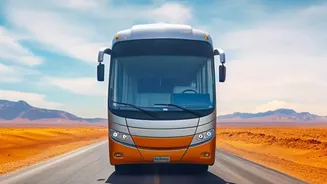
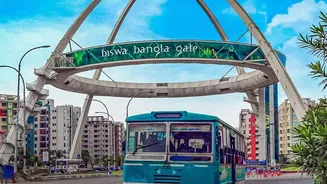
On the other side of the debate is the Bus Rapid Transit System, or BRTS. This system uses dedicated, exclusive lanes for buses, allowing them to move much faster and more reliably than conventional buses stuck in mixed traffic. Think of it as a metro-on-wheels. The primary advantage of a BRTS is its significantly lower cost and faster implementation time. Unlike a metro, which requires years of disruptive construction to lay tracks and build stations, a BRTS can be implemented more quickly on existing road networks. The system is also more flexible; routes can be adapted more easily as a city grows. For cities looking for an efficient solution without the monumental price tag of a metro, BRTS presents a compelling, pragmatic choice.
The Centre's Stance
The decision is not just up to the state. The Union Ministry of Housing and Urban Affairs (MoHUA) has twice rejected the proposals for Metro Rail in both cities. The Centre's reasoning is based on its 2017 Metro Rail Policy, which suggests a population threshold of 20 lakh (2 million), a figure both cities fell short of in the last census. Beyond population, the ministry also concluded that the DPRs did not prove a metro would offer significant travel-time savings for the average commuter journey of around 7.5 km, once the time taken to walk to and from stations is included. Consequently, the Centre has officially recommended that the state explore a BRTS, suggesting it is a more cost-effective and suitable solution for the current needs of Coimbatore and Madurai.
Cost vs. Capacity
The financial gulf between the two options is immense. A Metro Rail system is an incredibly capital-intensive undertaking. Studies comparing the two systems in an Indian context have shown that a metro can cost nearly 40 times more per kilometre to build than a BRTS. The proposed projects for Coimbatore and Madurai were estimated to cost around ₹10,740 crore and ₹11,360 crore, respectively. While a metro has a much higher passenger-carrying capacity, the sheer cost difference makes BRTS an attractive option, especially when the Centre is hesitant to approve funding. The debate then becomes whether to invest in a system that can carry the maximum number of people in the long term, or one that can solve immediate traffic woes more affordably.
Shaping the Urban Future
This choice goes beyond transportation; it's about urban planning. A metro, with its fixed stations, encourages dense, transit-oriented development, where businesses and housing cluster around transit hubs. It can fundamentally reshape a city's geography. A BRTS, while efficient, works within the existing road infrastructure and may not spur the same kind of concentrated development. The rejection from the Centre has pushed Tamil Nadu to a planning crossroad. Pursuing the Centre’s recommendation for an elevated or at-grade BRTS would require fresh feasibility studies and a complete rethink of the transport blueprint for both cities.