



The Market Today: A Tale of Two Ends
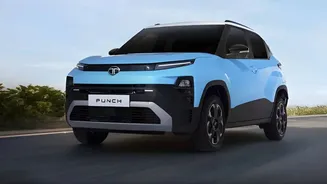
The Indian electric car market has been a story of two extremes. At one end, Tata Motors has successfully captured the affordable segment with models like the Tiago EV, Punch EV, and Nexon EV, making electric mobility accessible to a wider audience. The brand
has dominated the market, holding a significant share by offering practical, value-for-money electric cars. On the other end of the spectrum are premium and luxury offerings from brands like Hyundai, Kia, BMW, and Mercedes-Benz, catering to a niche segment of buyers with deep pockets. This has left a large gap in the middle—the crucial Rs 15 to 30 lakh segment—where many Indian families look to buy their primary vehicle. This gap is precisely where the next chapter of India's EV story is being written.
The Coming Wave: More Choices for Everyone
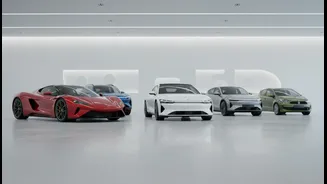
Automakers are gearing up for a significant product offensive aimed at filling the void in the market. The coming months and years will see a flurry of launches that promise to democratize the EV experience. Maruti Suzuki, India's largest carmaker, has entered the fray with its first EV, the e-Vitara, priced competitively to take on established players. Mahindra is also making aggressive moves with its 'Born Electric' platform, launching new-age SUVs like the BE 6 and XEV 9e, with more models planned. Hyundai is expected to bring a compact electric SUV, while Vietnamese manufacturer VinFast is also preparing to launch affordable models like the VF3. Even existing players are expanding their line-ups; Tata recently launched the Sierra EV and plans a Harrier EV, pushing further into different SUV categories. This influx of new models is a clear signal that the industry is moving from catering to early adopters to attracting mainstream buyers.
What's Driving this Change?
Several factors are converging to fuel this expansion. Firstly, government support through schemes like FAME (Faster Adoption and Manufacturing of Electric Vehicles) and its subsequent iterations has been crucial in stimulating demand and encouraging local manufacturing. While the direct subsidies for private cars have been debated, the overall policy push creates a favourable environment. Secondly, the cost of batteries, the single most expensive component in an EV, is gradually decreasing due to technological advancements and scaled-up production. Automakers are also investing heavily in localising components to bring down costs further. Finally, fierce competition is a powerful motivator. With new domestic and international players entering the market, every brand is under pressure to offer compelling products at various price points to capture market share.
Beyond the Price Tag: The Ecosystem Challenge
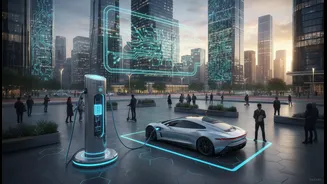
While more affordable models are welcome, the price is not the only hurdle for mass EV adoption. The lack of widespread and reliable public charging infrastructure remains a primary concern for many potential buyers, leading to 'range anxiety'. Although the network is growing, coverage is still sparse outside of major metropolitan areas. Other challenges include long charging times on standard home connections and a lack of standardization in charging connectors. For the EV transition to be truly successful, investment in the ecosystem—charging stations, battery recycling, and skilled service technicians—must keep pace with the launch of new vehicles. The government is aware of this, with upcoming policies expected to focus more on infrastructure development.