





An Ever-Shrinking Timeline
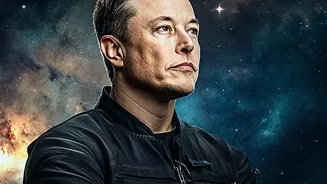
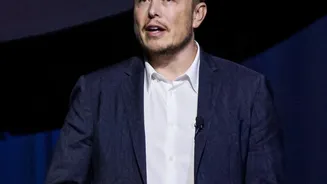
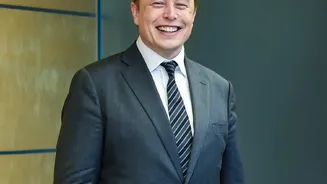
In recent interviews and public appearances, including a notable discussion in Davos and with The Economist, Elon Musk has confidently forecasted that Artificial General Intelligence (AGI), or superintelligence, is no longer a distant sci-fi concept but
a near-term reality. He now predicts that AI will likely be smarter than any single human by the end of 2026 and could exceed the combined intelligence of all humans by 2030 or 2031. This represents a significant acceleration of his own previous forecasts, which had already been considered aggressive by many in the field. This timeline isn't just a casual guess; it's a reflection of the staggering pace of development Musk sees in the industry, driven by exponential growth in computing power and the sophistication of AI models.
What is Superintelligence?
The term 'superintelligence' often conjures images of sentient robots from movies. In reality, experts are referring to Artificial General Intelligence (AGI). This is fundamentally different from the AI we interact with daily, like chatbots or navigation apps, which are forms of 'narrow AI' designed for specific tasks. AGI, by contrast, would be a hypothetical form of AI that can understand, learn, and apply its intelligence to solve any problem a human being can. Musk's prediction goes a step further, to a point where an AI's cognitive abilities would not just match but vastly exceed the brightest human minds in virtually every field, from scientific discovery to creative arts. This leap from task-specific tools to a general, superior intellect is the core of the AGI pursuit.
The Race for AI Supremacy
Musk's prediction is not made in a vacuum. It comes as his own company, xAI, is in a fierce race with other tech giants like Google's DeepMind and OpenAI. The competition is fueled by unprecedented investment and an insatiable demand for computing resources. Musk has noted the massive number of GPUs—specialized processors crucial for training AI—being deployed by these companies. For instance, he mentioned that training newer versions of his AI model, Grok, will require tens of thousands of high-end Nvidia GPUs. He believes the primary constraint on AI development is no longer just algorithms but the sheer availability of computing power and electricity to run these massive data centers. This hardware arms race is what underpins the belief that progress will continue its rapid, exponential climb.
A Spectrum of Expert Opinion
While Musk’s timeline is headline-grabbing, it represents the more aggressive end of a wide spectrum of expert forecasts. Many credible researchers agree that AGI is a question of 'when,' not 'if,' but their timelines vary significantly. Geoffrey Hinton, often called a 'Godfather of AI,' has warned that superintelligence poses an existential threat and believes it could arrive within 20 years, though he acknowledges some, like Musk, think it could be much sooner. On the other end, Meta's chief AI scientist, Yann LeCun, is more skeptical of current approaches based on Large Language Models (LLMs). He has cautioned that significant scientific breakthroughs are still needed and that timelines of 5-10 years are overly optimistic, as unforeseen hurdles are inevitable in scientific progress. This divergence highlights the fundamental uncertainty and different philosophies about what it will take to cross the threshold to true AGI.
Beyond the Hype: The Unsolved Problems
Despite the rapid progress, formidable challenges remain on the path to AGI. Researchers point to several key areas where today's AI still falls short, including true reasoning, common sense, and a deep understanding of the physical world. While models can process vast amounts of text and data, they often lack the contextual understanding and adaptability of even a human child. Furthermore, the issue of 'AI alignment'—ensuring that a superintelligent system's goals are aligned with human values and safety—is a paramount concern that many experts, including Hinton, believe we have not come close to solving. Musk himself has called for safety protocols and peer review among top AI labs to manage the risks before they become uncontrollable. These unsolved problems could act as significant brakes on the timeline, potentially pushing the arrival of true, safe AGI further into the future.