




Gaganyaan's Grand Ambition
At its heart, the Gaganyaan mission is ISRO's landmark project to demonstrate human spaceflight capability by launching a crew of astronauts into a 400 km orbit for a mission lasting up to three days. Success will make India only the fourth nation in the world
to independently send humans to space, after the Soviet Union, the United States, and China. The programme is not just a single launch but a comprehensive effort to build the technology and infrastructure for sustained human presence in space, with long-term goals that include a space station.
The Crucial Next Step: Uncrewed Flights
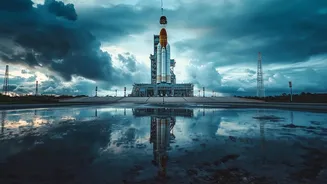
Before astronauts, or 'Gaganyatris', board the spacecraft, ISRO must ensure every system is perfect. The next major step is a series of uncrewed missions designed to validate the technology in real-world conditions. According to ISRO Chairman V Narayanan, work on the first uncrewed mission, G1, is progressing vigorously, with a launch targeted for later this year. This flight will test the human-rated LVM3 rocket, the environmental control and life support systems, and the crucial re-entry and recovery procedures. It is the ultimate dress rehearsal before the crewed launch planned for 2027.
Meet Vyommitra: The Humanoid Pioneer
A key player in these uncrewed flights will be Vyommitra, a sophisticated half-humanoid robot developed by ISRO. Meaning "space friend" in Sanskrit, Vyommitra is designed to simulate human functions and will ride inside the crew module. It can operate switch panels, monitor the cabin environment, and communicate with ground control. Vyommitra's primary role is to act as a robotic test dummy, gathering critical data on how the spacecraft's life support and control systems perform during flight, launch, and re-entry, ensuring the conditions are perfectly safe for future human occupants.
Testing for Every Contingency
Astronaut safety is the absolute top priority for the Gaganyaan mission. A major part of the current phase involves rigorous testing of the Crew Escape System. This system is designed to jettison the crew module to a safe distance in case of an emergency on the launch pad or during ascent. ISRO has already conducted successful Pad Abort and Test Vehicle Demonstration missions to validate this life-saving technology. These tests, along with thousands of other ground and structural checks, are essential to human-rate the launch vehicle and ensure the crew can be brought back safely under any circumstances.
The Astronauts in Waiting
While the technology is being perfected, India's four designated astronaut-candidates are deep in mission-specific training. Having completed their generic training in Russia, they are now at ISRO's Astronaut Training Facility in Bengaluru, preparing for the specifics of their flight. Their regimen includes everything from spacecraft systems operation to survival training, ensuring they are fully prepared for their journey into low-Earth orbit. This training runs in parallel with the uncrewed flight preparations, with every milestone bringing them closer to their historic mission.
Why This Phase Matters
Successfully completing the uncrewed test flights is the final green light for India’s human spaceflight ambitions. This phase is about more than just technology; it is about building confidence. Each successful test validates years of design and development, proving that the systems are robust, reliable, and, above all, safe. For India, the Gaganyaan programme represents a massive leap in its scientific and engineering prowess, with implications for national prestige, technological self-reliance, and inspiring a new generation of scientists and explorers. The successful execution of these next steps will set the stage for India to not only join an elite club of spacefaring nations but also pursue even greater ambitions like a national space station and crewed lunar missions.